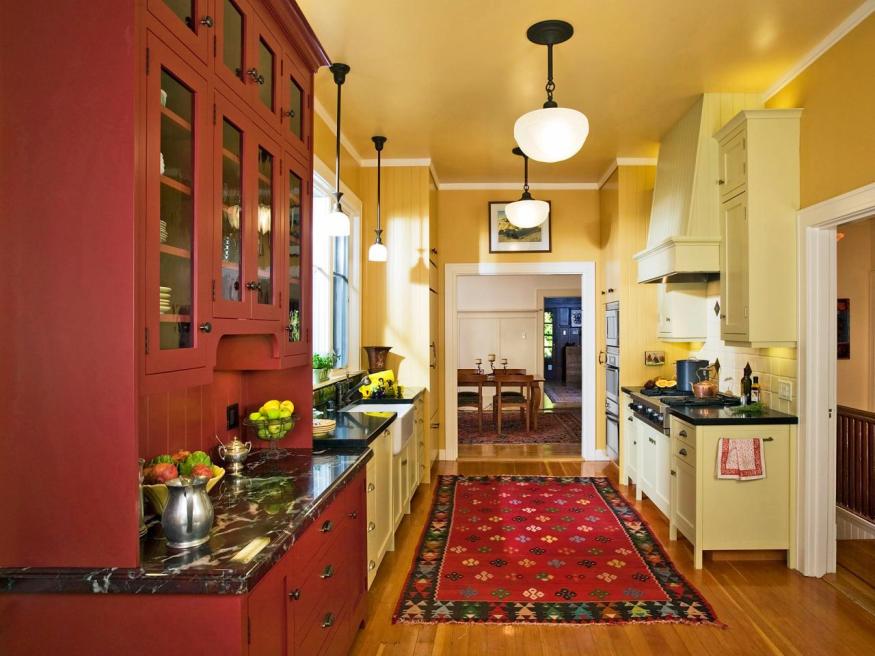
Implementation of a backsplash surface behind the kitchen desk is an important part of design. The regular heavy duty, greasy dirts and moisture require proper solutions.
Because of the above reasons, kitchen usually has a bottom to desktop height tile cover. This can be also a good solution, but not the only one. Tile is comfortable since easy to clean and hygienic, but it’s enough to restrict it to the area that has the most heavy duty: behind the sink, oven or the the desk between the upper and lower cupboards. Other parts of the wall can be painted or even covered by wallpaper (keep in mind the good ventilation of the room).
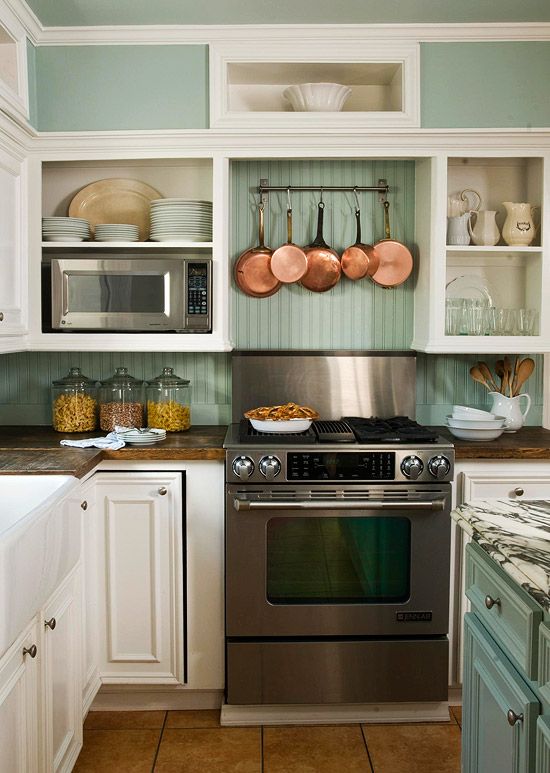
An other solution can be the wooden cover coated with washable paint or multi layer lacquer. Grooved wood panelling fits well to several styles, can be coloured according to the needs. Feel free to use it instead of tiles!
Of course, there are washable wall paints too. This doesn’t mean high-gloss surface in all cases seen in old canteens. Non-glossy and satin versions are also produced in all colours of the rainbow, they can be used practically anywhere in the kitchen.
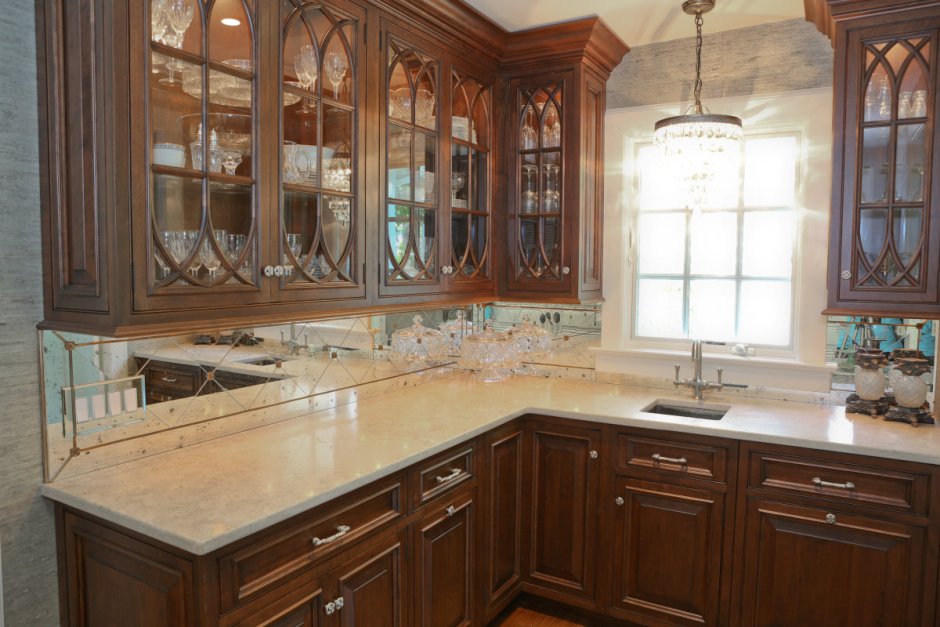
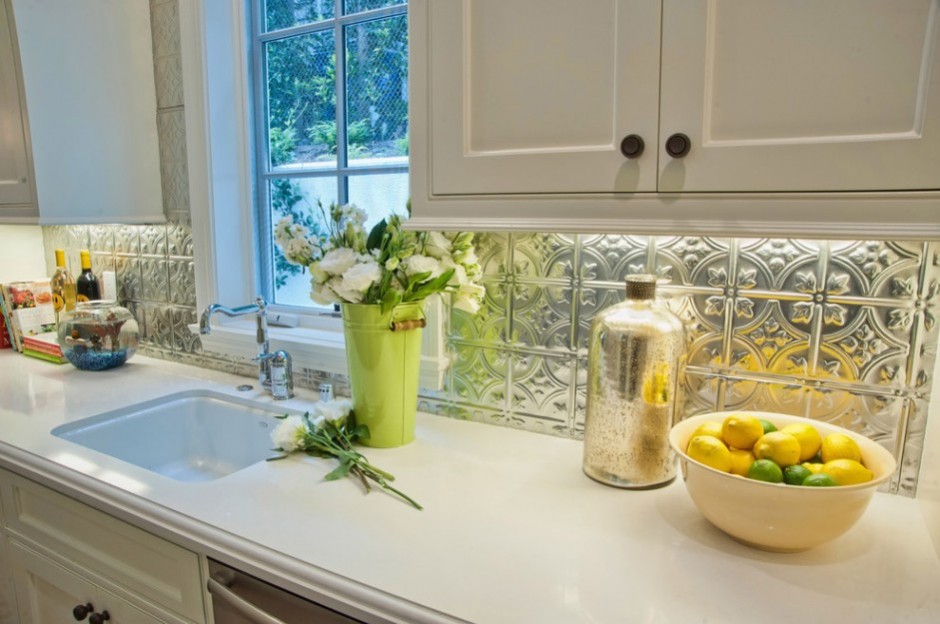
More spectacular solution is using a mirror. It can be antiqued, coloured or simple. We can use the wire-grid versions too, the result will be interesting and unique.
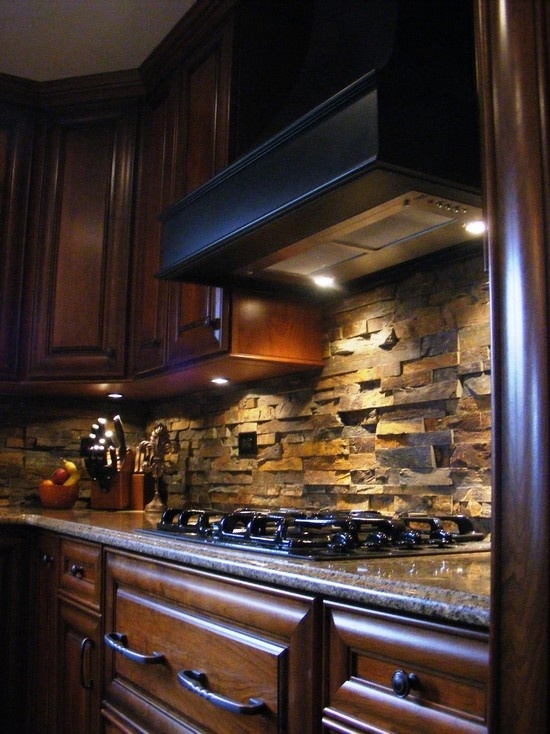
Metallic ceiling tiles give elegant and a little bit masculine look to the kitchen. Natural stone covers can be also applied, but first they have to be impregnated right after bonding to avoid absorbing moisture and dust.
For finding the back splash surface fitting best to your kitchen, ask for help from an interior designer.
Archives
My project 1.
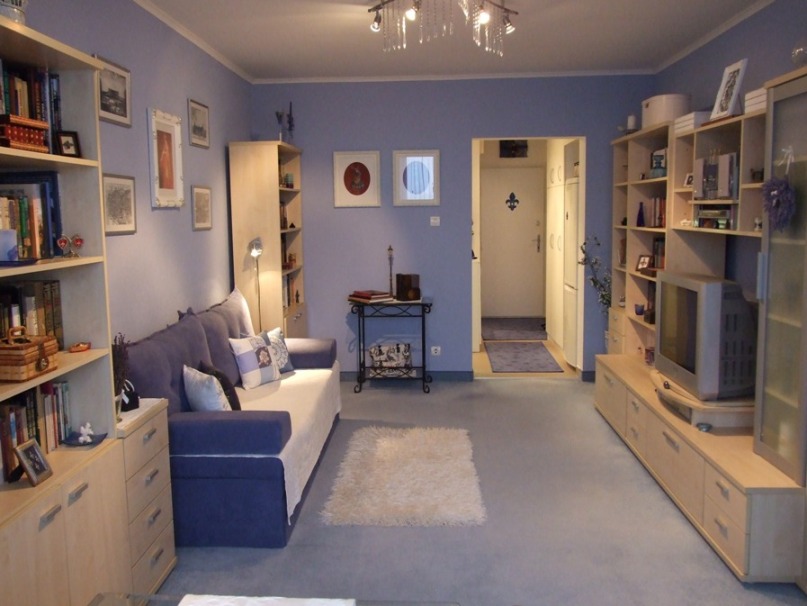
One of my prior projects: 38 sqm block apartment in calming blue
Further pictures: https://classicinteriors.hu/en/references/21-references/35-references02
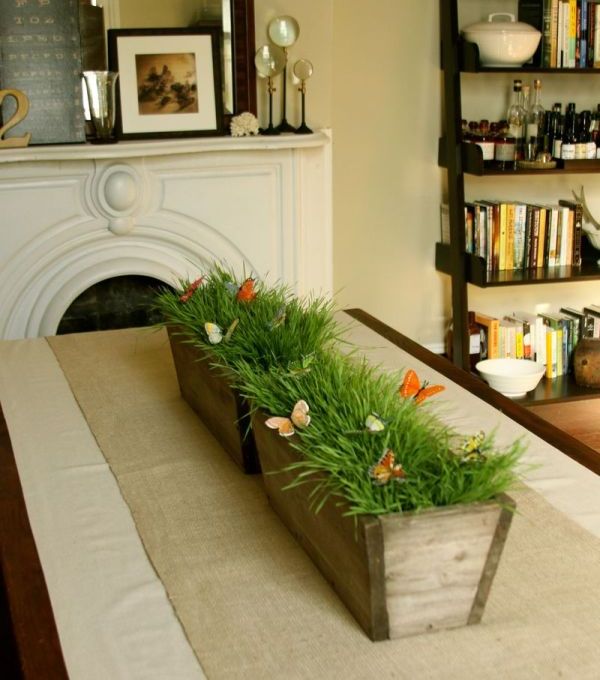
Table centerpiece 1.
Old objects’ new functions
In most of the homes there are many old objects in the attic, in the basement and hidden in the garage which are though not attractive and not useful, they are not thrown out because „it will be good for something” or just simply because of laziness for walking to the dump with them. Nowadays it is more and more fashionable to give new life to old household objects and after a makeover giving them a completely other function as originally they were designed for. Here are some examples which fit firstly to country styles or Scandinavian-like interiors but can be fit to any environment up to taste:
If baskets are hung on an old ladder, it can be a perfect storage in a gardrobe or bathroom. Putting shelves between the steps of a single ladder, it will be look very good in the living room as a bookshelf. A smaller ladder can be a nightstand also.
Let’s pad the old leather or textile-leather suitcase, fix short legs on it and it can be used as a coffee table. If a big soft pillow is placed in it and its lid is fixed open, it can be a comfortable bed for our pets. We can spare the price of a side table near the reading armchair with putting some old suitcases on top of each other.
Old wooden window frames from a wrecking can be reused as mirrors for example above the console table in the hall or above the fireplace. Putting mirrors in the old doors instead of the inner panels, they will be full-body pieces in the gardrobe. They can be interesting headboard also with which a simple bed can be popped up.
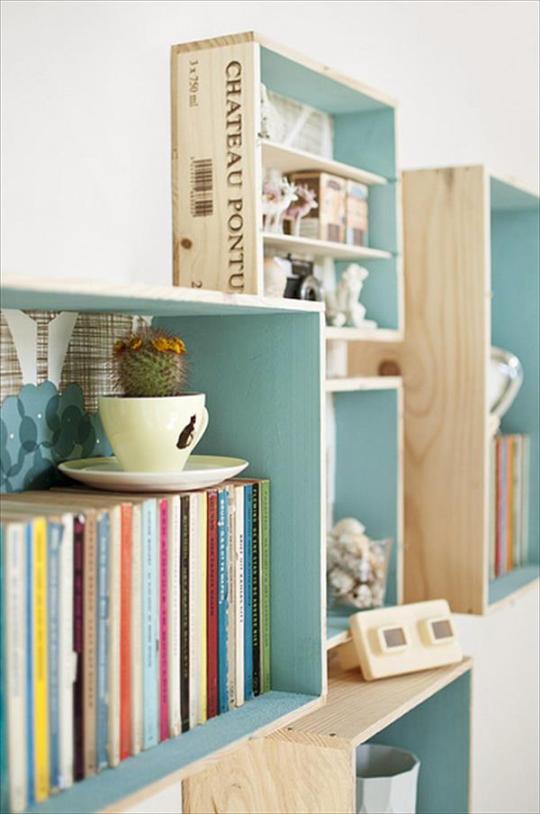
Old wooden crates and boxes fixed on the wall can function as perfect bookcases. If there is a collection of many smaller wooden boxes, fix them on the wall in a shape without their lids, this way they can be showcases for smaller memories also.
An old metal bucket can be reused as a vase for flower bouquets or plants can be directly pot in them too. Log can be stored in them for the fireplace or can be transformed to industrial style lampshades.
The possibilities are almost countless. If you have an old object which you would like to make a part of your home again but have no idea, ask for help of an interior designer for planning.
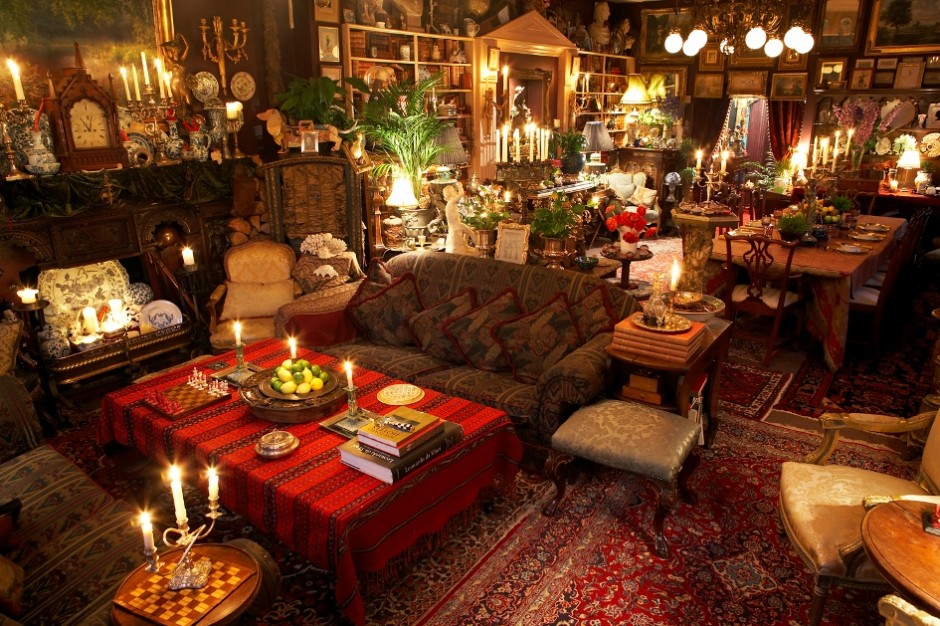
Candles
Nursery
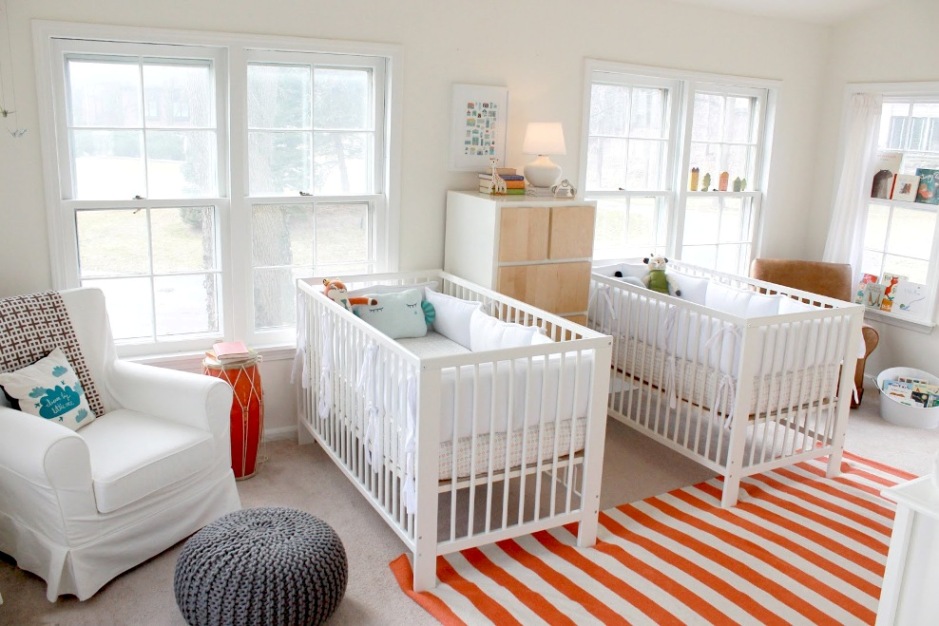
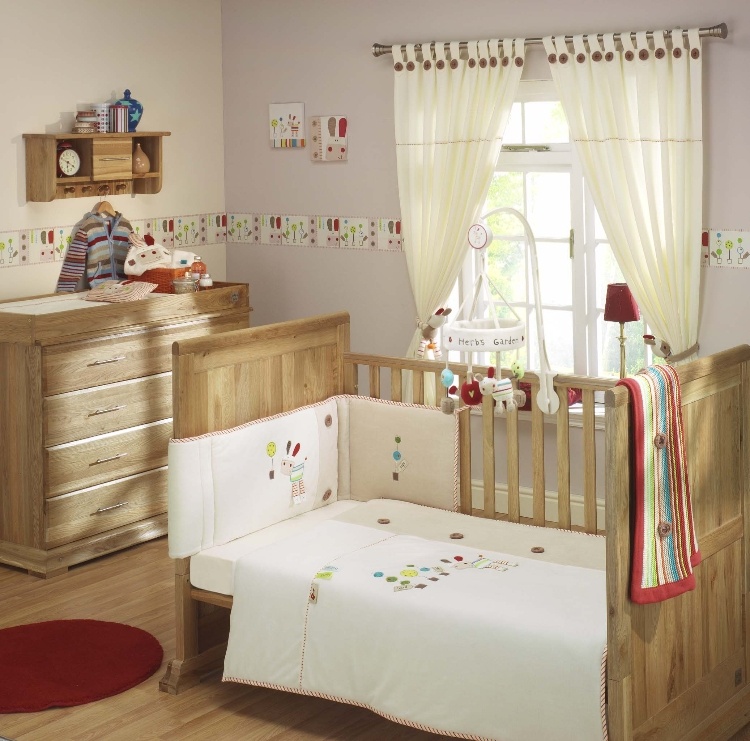
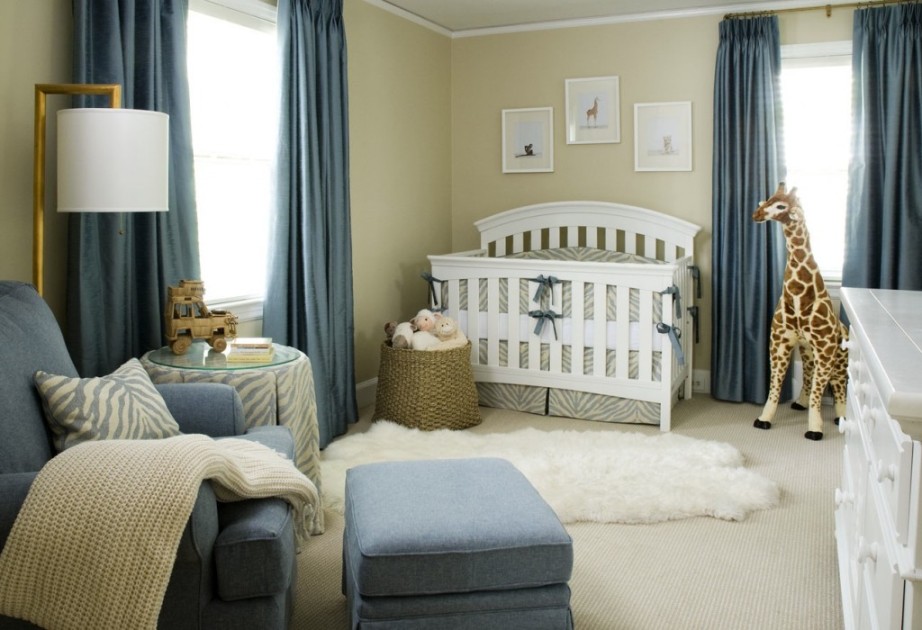
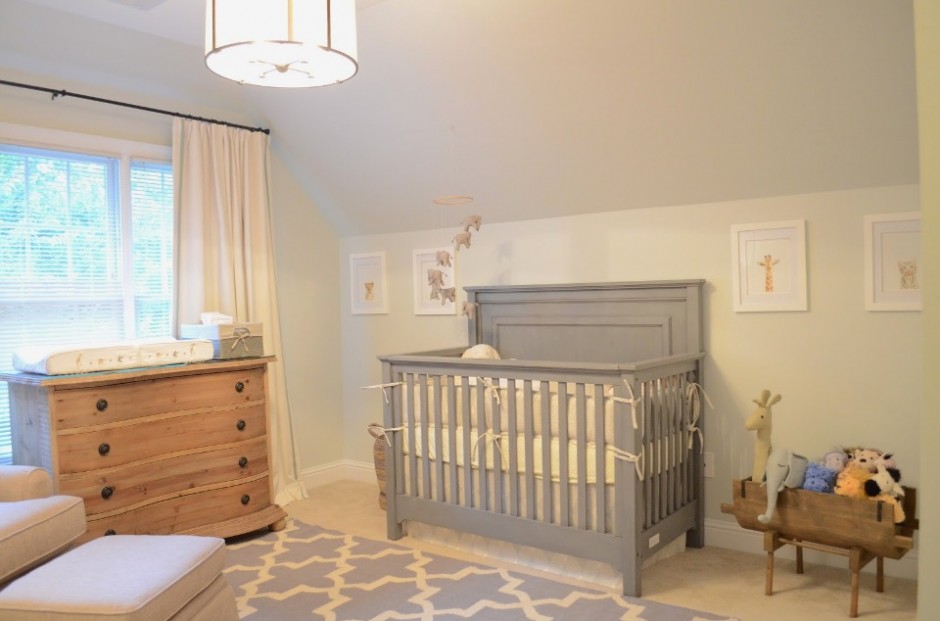
A newborn is always a great event in a life of a family. Weeks before the child room will be finished, the furniture, clothes and other required accessories will be purchased. There are some issues to consider while doing the preparations.
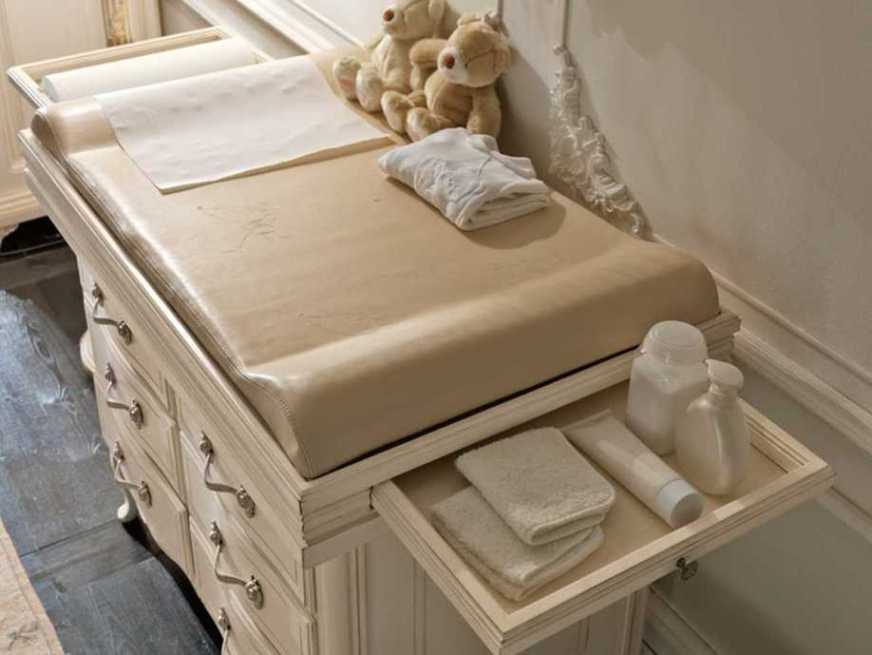
The baby’s room should be designed to let the baby grow up in it, that means to be suitable at least till 6 years without change. Cradle is a fashionable furniture again, but not too practical, since it can be used for only a few months. Instead, a cot should be bought that can be converted according to the future needs: the grid can be removed, the height can be adjusted and even the length can be extended. Diaper changing table has to be chosen to fit the height of the parents. The most practical ones have drawers and doors also, later it can act as a commode that gives place for all the small clothes.
Floor heating is not healthy in a baby’s room, it can cause dust allergy and the continuous heat coming from the floor is also not advantageous. A larger, loop pile carpet on a wooden floor or cork flooring can be ideal solution, they can be cleaned easily and warm enough for climbing and toddling.
Generally the boy’s room is painted and decorated in blue and girl’s room in pink. Beneath, other colours can be applied of course, even natural tones like beige or cream. Babies need a big amount of visual stimuli, but not by the strong wall colours or brightly patterned wallpaper. The bottom third of the wall should be covered with resistant paint or wallpaper, since as the baby learns to walk, this area will be exposed to heavy duty. Because of this, framed pictures, photos should be positioned over access height. A shelf is needed for powders and lotions which can be easily accessed by parents when changing diapers, but not for the child.
Important to consider the requirements of the baby and the parents instead of the fashion at planning. If a practical and decorative baby’s room is the goal, ask for help from an interior designer.
Shabby chic
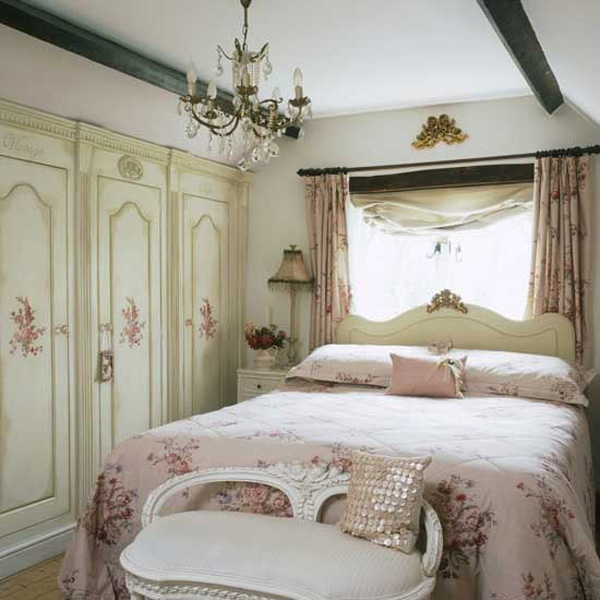
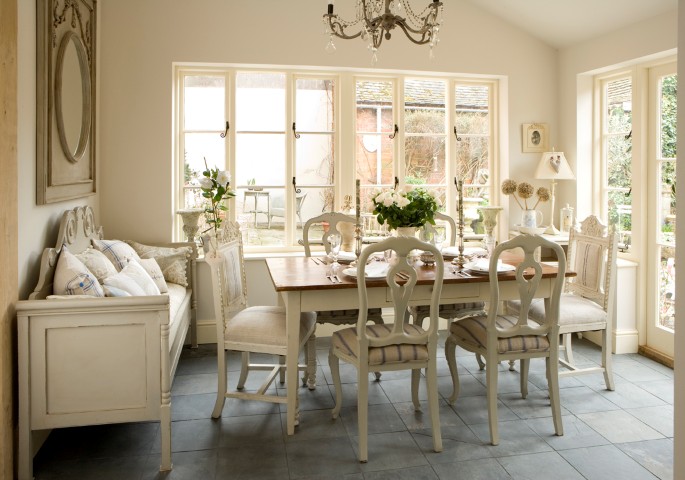
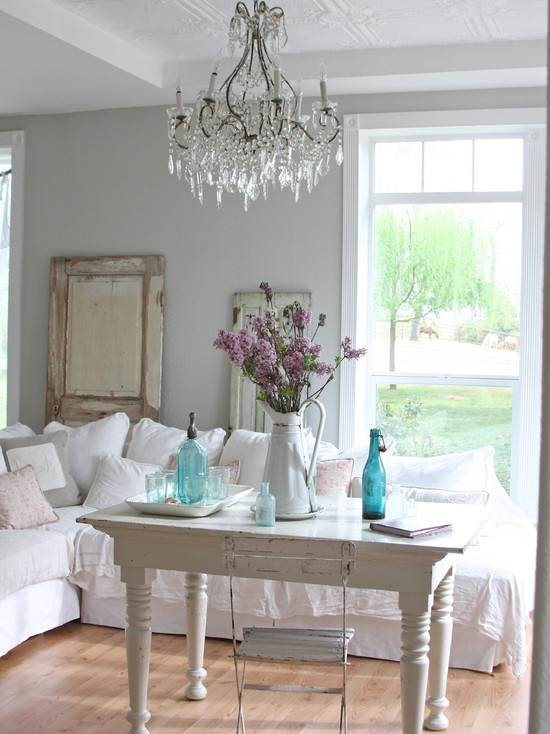
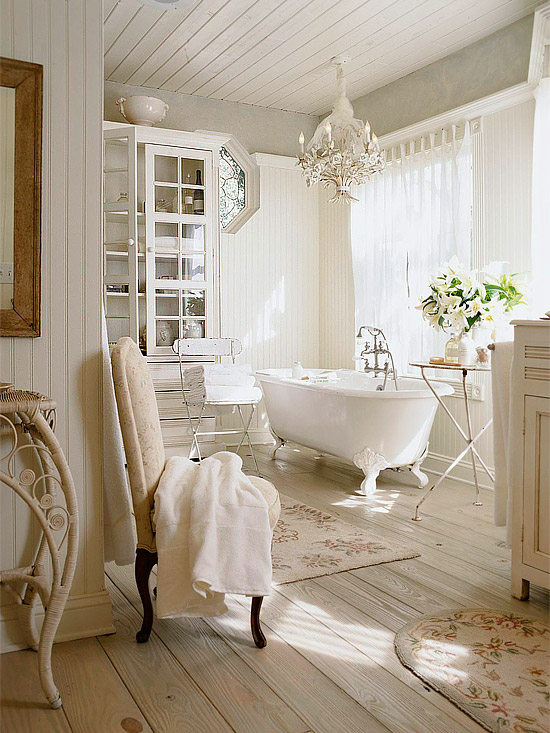
Shabby chic is an interior design style which is very popular nowadays. It can be relatively easily realized in any home.
A shabby chic interior is feminine, light and has a little bit warn effect, despite of this, still elegant. Dominant colors are white, grey, powder blue, pink, crème, light green and beige. Furnishing is made of wood, chairs are upholstered comfortably soft, or even wicker braided. Basically it has French style characteristics. Although the overall effect is rural, yet it fits well even in an aristocratic environment. The double doored large wardrobe, the Bergére armchair and the great variety of fabrics provide the luxurious, but still muted feeling. Feels like if we spend our holiday in our country castle.
We can produce the furnishing ourselves for this style. Let’s paint the old furnitures purchased at a flea market with off-white and generate the antique feeling using some umbra brown. Another method, if the paint is burnished back at the edges, at the handles and at the bottom of the legs. This simulates the worn effect gained by the heavy years of usage. At accessories, avoid using strong colors. Flower bouquet is always an important decoration element. It can be placed in practically anything, like a watering can, a jar or old cookie box. Select pastel coloured flowers, which fit to the rural atmosphere, like lavender, roses, tulip or wild flowers. Prefer natural materials at fabrics, like cotton or linen. Use patterned material or plain weaved ones occasionally with toile pattern using only two colors. Use them brevely, combine several hues of a given color. For metallic accessories, silver or gold color is the best choice.
If you like shabby chic, but don’t know how to start, ask help from an interior designer.
Color pairs 5.
Formal meal
Attending formal meals may cause a problem for many. The summary below could be useful also if only the home dinners with friends wanted to be made more glamorous:
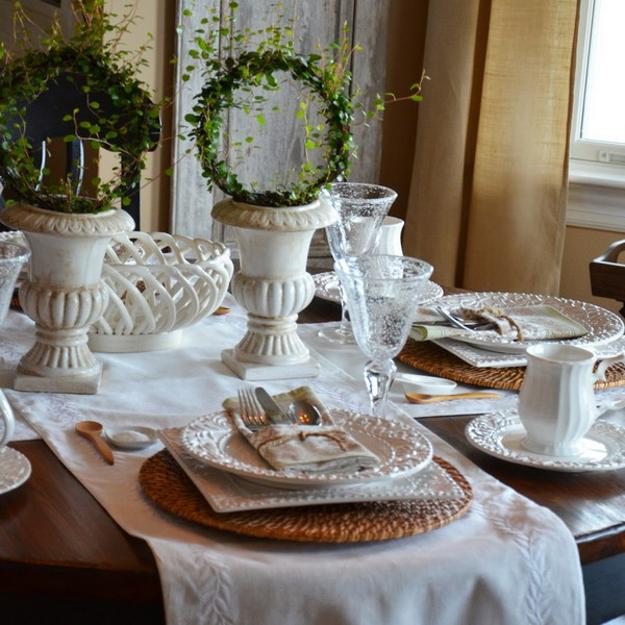
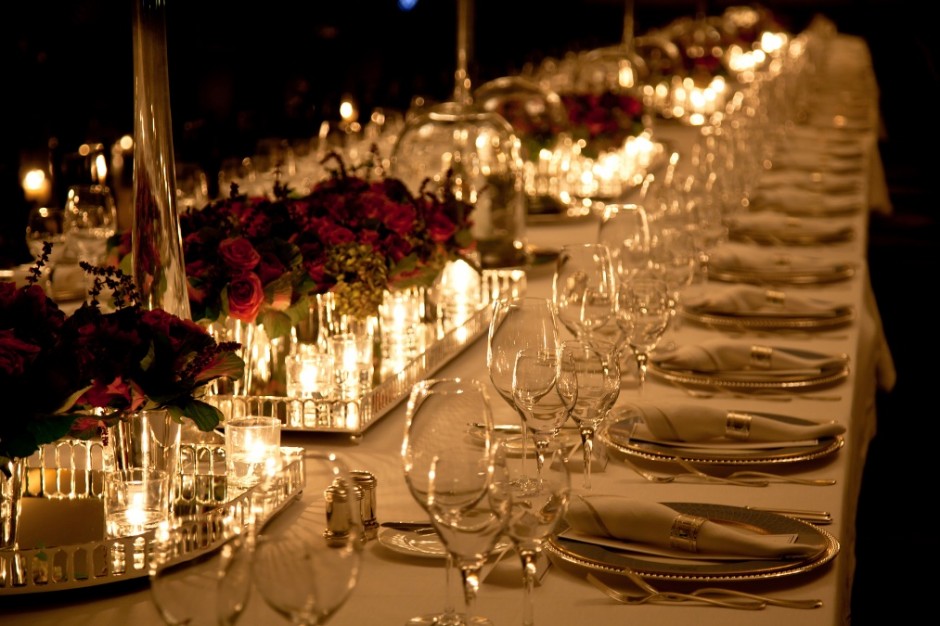
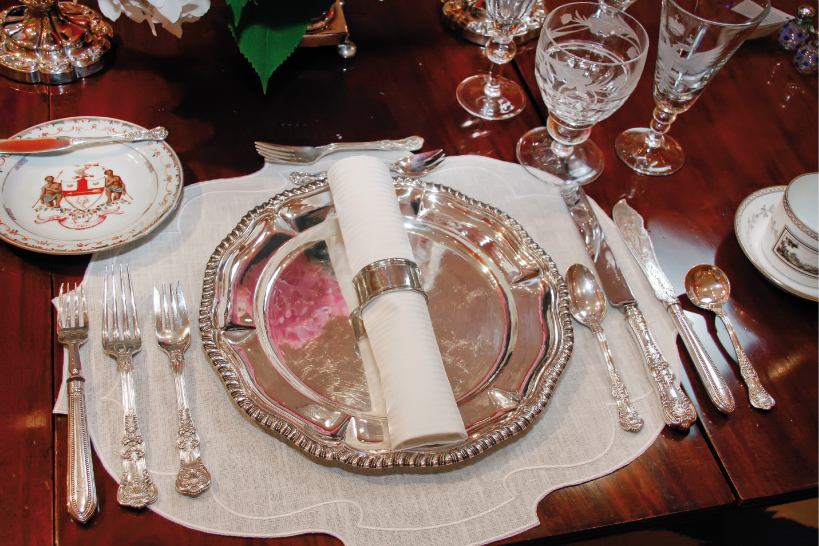
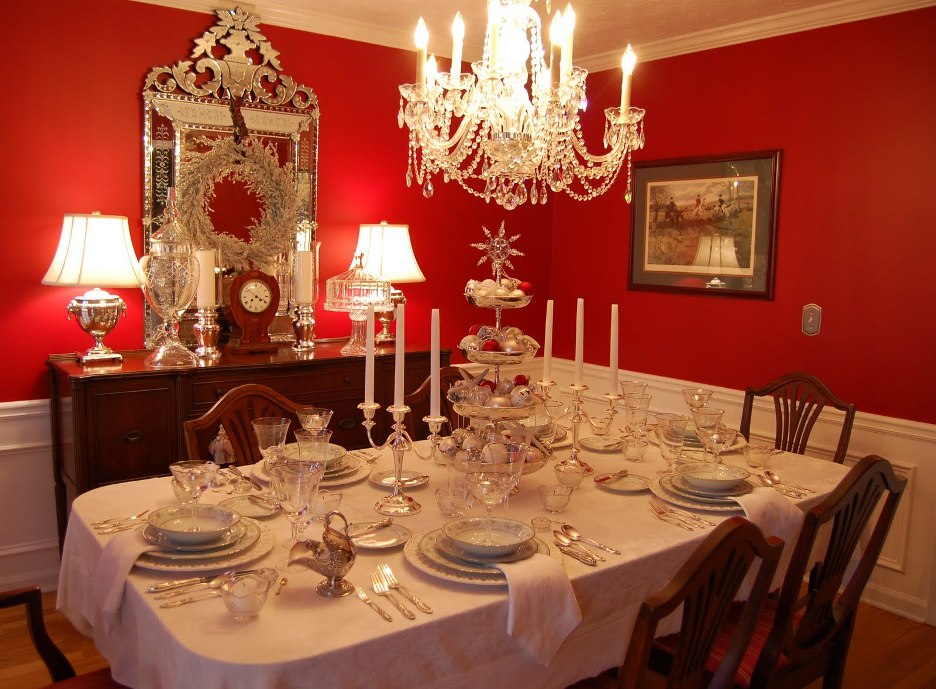
The tablecloth should be plain or tone-on-tone patterned as far as possible, expediently white or cream, in starched and ironed condition. This provides neutral base to the table set and the served food also. It should be overhanging about 30 cm from the edge of the table, this way the legs of the guest can go underneath. If a table runner is placed, the color of the napkins should be matched with it. If not, the napkins should be made of the fabric of the tablecloth or at least in the same color but made of fabric is a must. This should be placed in the middle of the plate or on the left of the forks.
The so-called service plate has to wait the guests when taking seats. The plates containing various dishes are placed on this, which are taken off after every dish. Even the service plate is taken off before the dessert. If there is a pattern, coat of arms or other decoration on the plate, it should always be on the top of it opposite to the guest.
All the cutleries for using are pre-placed around the service plate. Using order: from outside to inside. Knifes are put on the right side of the plate (appetizer, salad, main dish) with their edges towards the plate, and the soup spoon. Forks are placed on the left side, in the same order. The dessert fork is put above the plate with its handle on the left, and the dessert spoon above this with its handle on the right. The bread plate is on the left side of the plate with the butter knife on it.
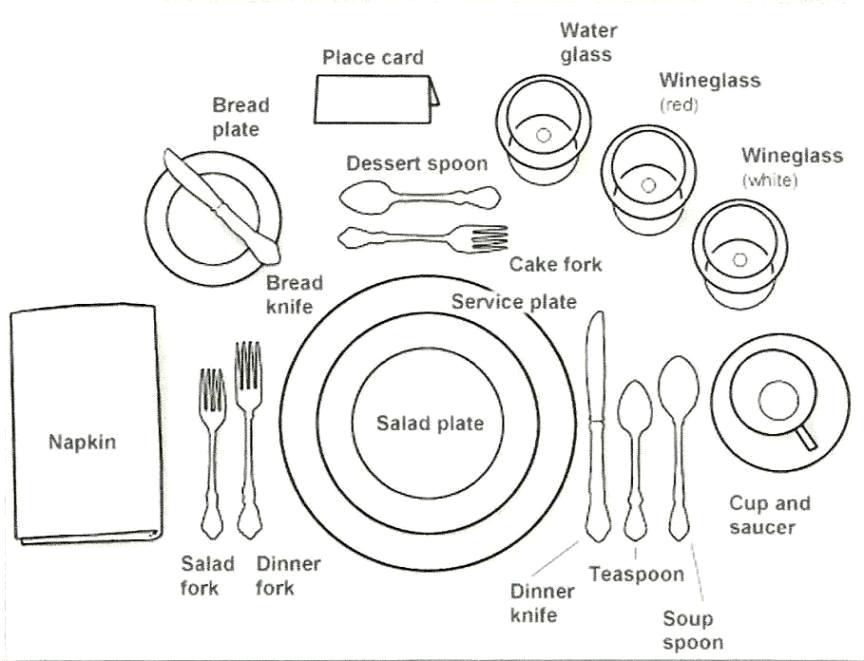
Glasses are put on the right side of the plate, above the knives. Maximum four glasses can be here, in a rectangular order or in a row in decreasing sizes to the right. These are glasses for water, red vine, white vine and aperitif. The set can be changed of course depending on the served drinks. Glass for champagne is not pre-placed.
The seating card is put above the dessert cutleries, the salt and pepper cellars are placed above the forks. The table centerpiece should be chosen according to the free visibility of the opposite guests above or under it, so the discussion is not disturbed by it. The needed space for comfortable eating is about 60 cm per person, this has to be considered when laying the table.
Ask for help of a style-advisor for formal and classy entertaining preparations.