Romantic mood by floral patterns
Archives
Inspiration 4.
Mouldings and others
Inspiration 3.
Checked
Blue
From all colors, blue is the most popular. Most people mention it as favorite color. Blue is an elementary color, its complementary is orange.
As a physiological effect, it decreases blood pressure and pulse. Calms, cools, makes you meditate and decreases appetite. We associate to sky, water, air by it – therefore it gives a light feeling. In symbolism, intelligence, loyalty, hope, truth, cleanness and heaven are associated to it. Helps to creativity and perspicacity.
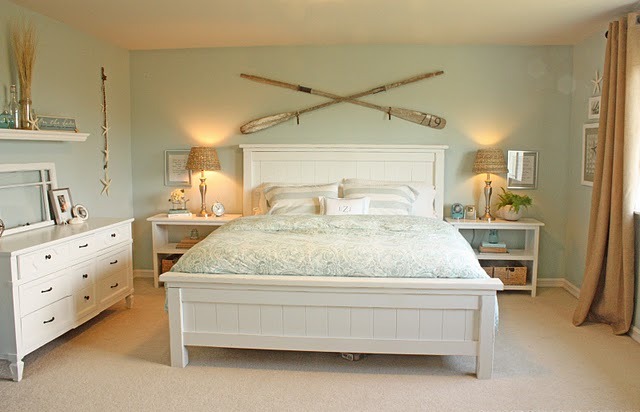
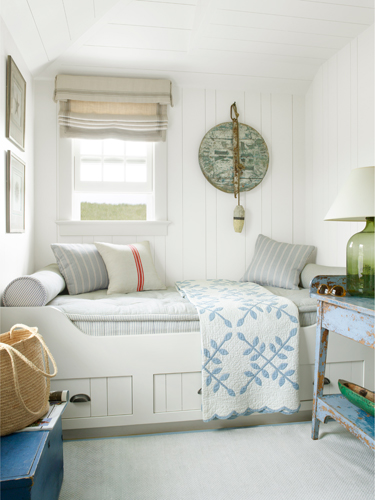
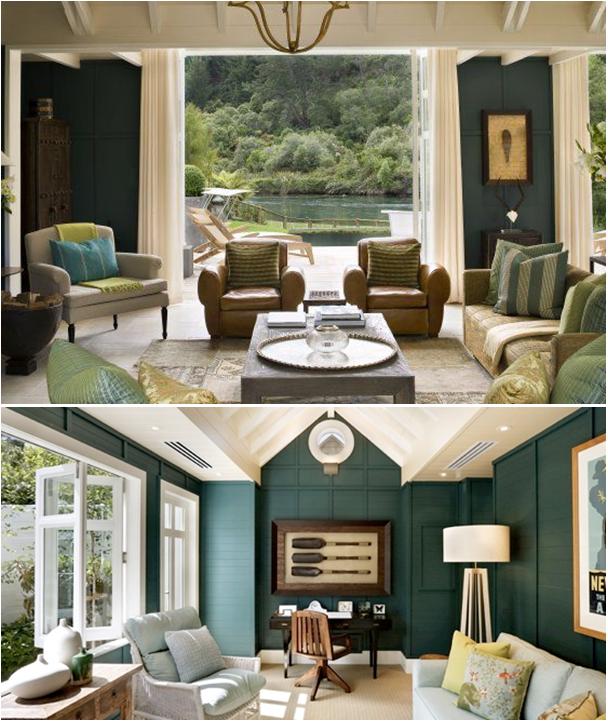
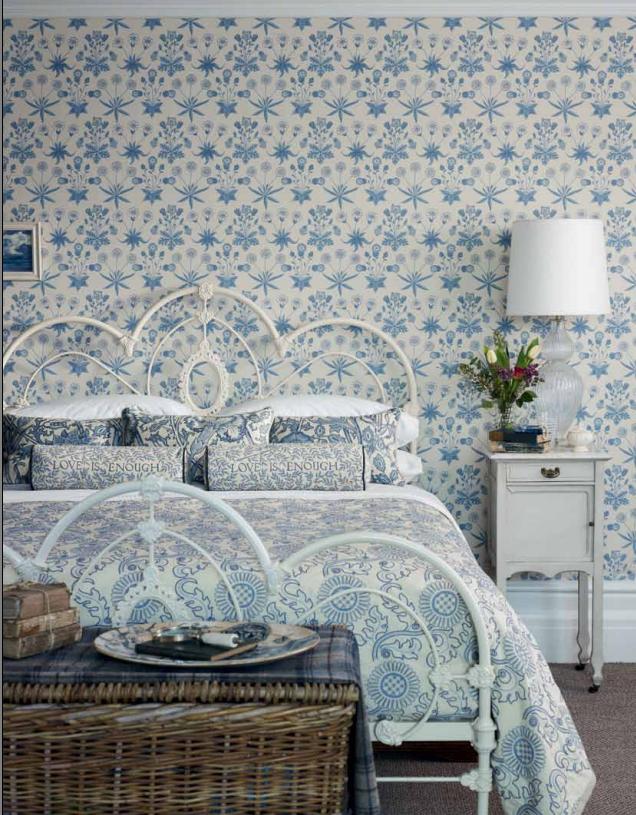
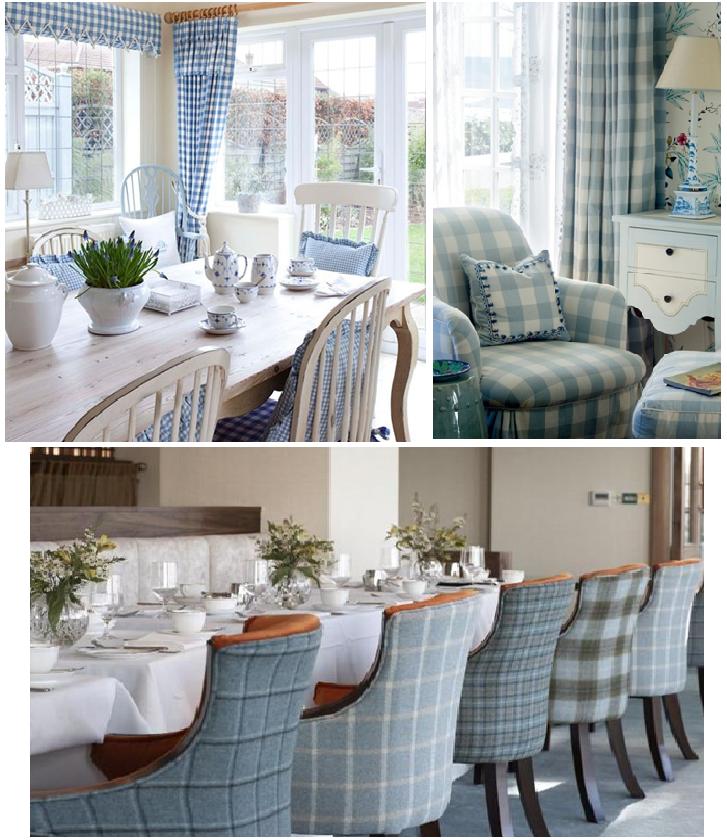
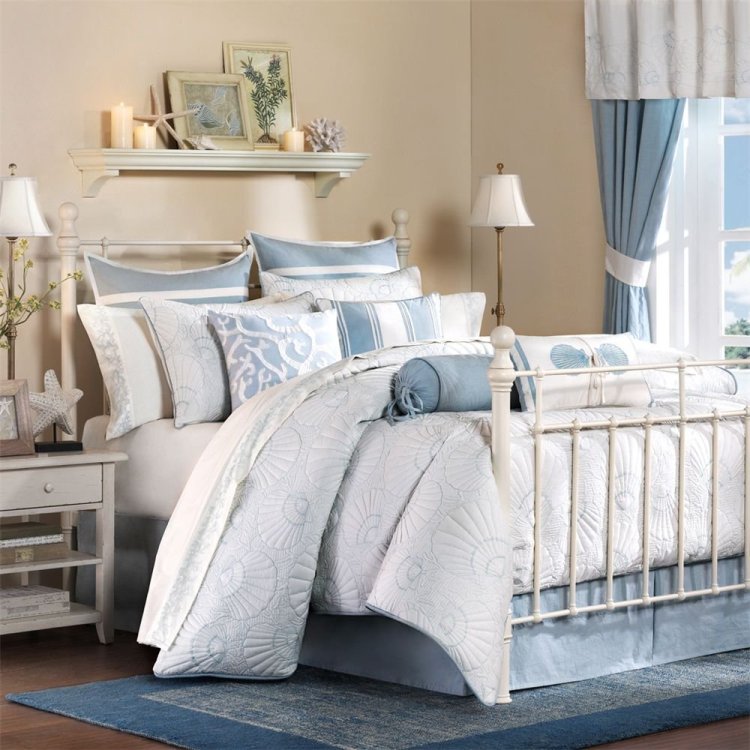
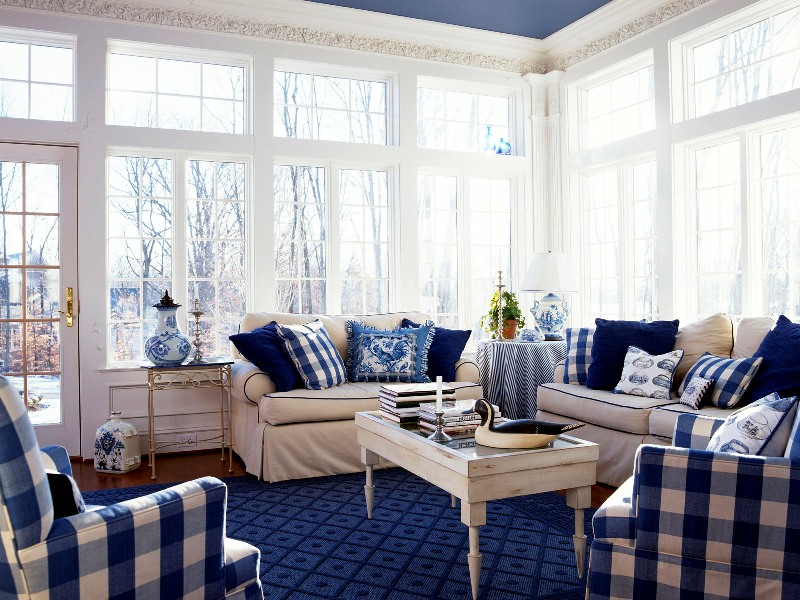
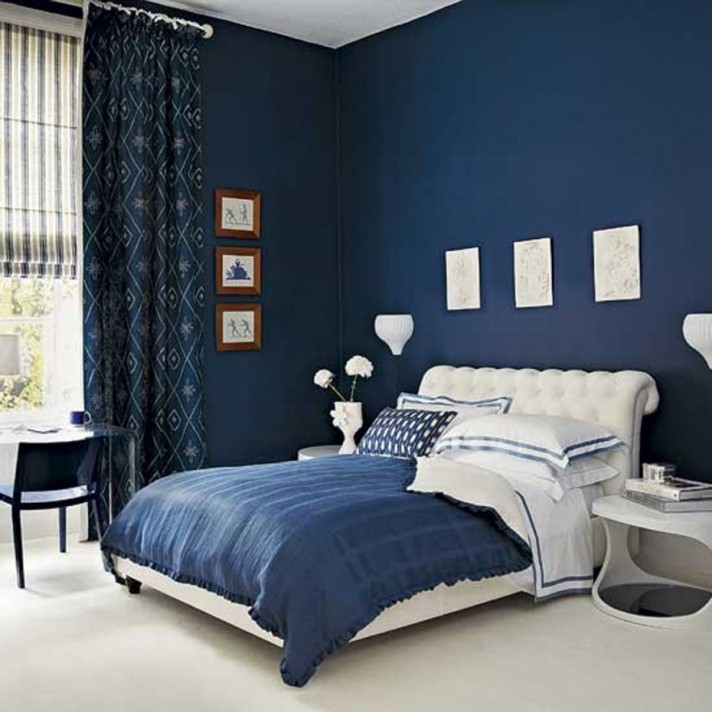
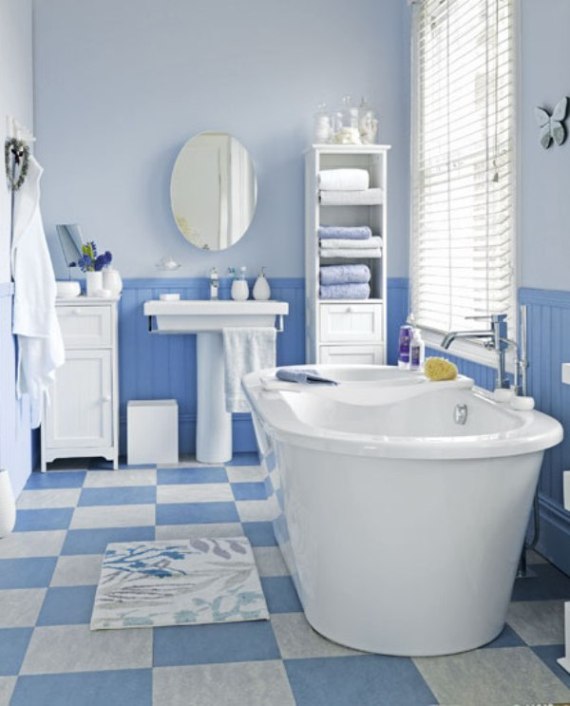
Blue is a cold color. In interior design, its light tones increase the space, make the room ethereal. Dark hues provide seriousness, stability and value. Use the warmer hues in North oriented rooms, else it can be felt too rigid without direct sunlight. In case of any other orientation, it can be ideal color for bedroom, living room, bathroom, or even for hall. Since blue is not a food color, use carefully in dining room and kitchen. Combined with white, beige and brown, it results a classic, elegant interior. Otherwise it cannot be overdosed. Wall or furniture can be blue, but in several cases both, if the hues are selected properly.
Feng shui assigns light blue hues to wood, dark hues to water element. Blue is the color of Jin, the female side. It belongs to the 5th chakra (throat).
It is frequently used in business life. People wearing dark blue suit are considered to be reliable. In logos of renowned companies, blue is the most common color.
Different hues of blue are hard to combine, because green and purple tones are incompatible. For implementing a real cozy blue interior, ask for help from a color advisor.
Useful accessories 1.
Chinoiserie
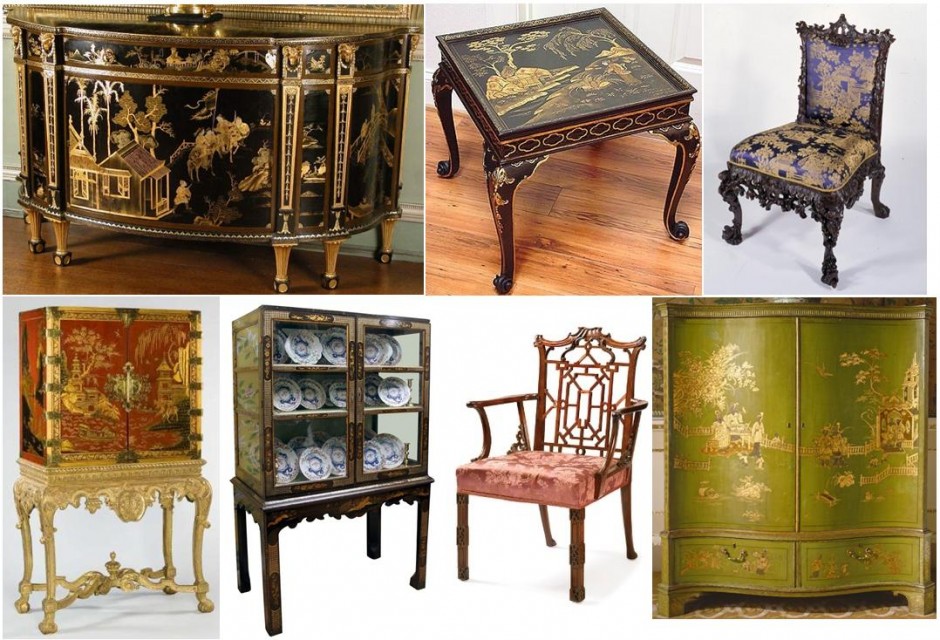
Chinoiserie style was very popular in Europe in the XVIII. century. By the vivid trading activities with the East, at the early XVII. century a large amount of furniture, usage- and ornamentical objects, silk arrived to the continent. The fashion of chinoiserie has spread in France thanks to Madame Pompadour (1721-1764). As a mistress of the king, she defined the fashion and most of the orders are placed by her also. In England, the style got known by the drawings and plans of Thomas Chippendale (1718-1779), who was a brilliant designer and furniture maker.
Chinoiserie style appeared as a part of rococo. The porcelain from China has always held in high esteem, because its price, they took place in the interiors of the aristocrats. In 1709, the secret of manufacturing porcelain has been deciphered, since that time, the Chinese pieces could been copied. Main characteristics of the furnitures of the style was lacqering technique. This was a time consuming procedure, even 30-50-100 layers cover a piece. Black, red and green lacquers were the most popular. The best replica was Vernis Martin, but not as good as the original. Often applied with golden decorations for higher contrast. In Europe the wallpaper was also a novelty, till then only painting or upholstery covered the walls. Main motives of chinoiserie style are birds (parrots and cranes), dragons, monkeys, grids, flowery branches, chinese genres and landscapes as the central decorations of furnitures. The pierced-backed chair became popular such as the pagoda like structures on beds and vardrobes, the rice paper covered paravan and the bamboo-like carvings.
From these features an interior designer easily can create an interior that fits to the present taste, providing classic and elegant solution for the nowadays popular oriental style.
Inspiration 1.
French Renaissance
During the French Renaissance not only architectural and artistic works were outstanding, but the beauty of furnishing and comfort came into view also. This era is really hallmarked by two sovereigns: François I. (1494-1547) met the new trend following Gothic during his Italian campaigns. He immediately fell in love with the ornaments and anthropocentric vision. When he went home, he implemented these in France. Many Loire castles were built or rebuilt during his reign (e.g. Chambord, Chenonceau, Villandry). He invited Leonardo Da Vinci in his court. Cathrine de Medici (1519-1589) was born is Florence and grew up in the heyday of Italian Renaissance. She took this love to France, where she got married with the future Henry II. As a regent she spent big amounts for furnishing castles, re-buildings (Louvre) and art treasures.
The three-dimensional effect is the characteristic of Renaissance living spaces: huge fireplaces, imposing marble staircases, big collective spaces. The stone walls were covered by richly patterned tapestries which protected partly against cold also. Beds had legs against the coldness of the floor and bugs, and they had canopy which provided not only the private area but protected against draught also. This time it was already common to welcome important guests in bed.
The first versions of wardrobes (dressoire, cabinets) appeared beside chests as main storages. These were richly carved, showing the wealth and rank of the owner also. Furniture had architectural forms: colonnade, arches, sill etc. Framed structure, marquetry, veneer and inlays were first used this time. Chairs could be fix or folding. Upholstery appeared (leather, velvet) which provided more comfortable seating. Tables are not take-apart anymore, they are sturdy and imposing pieces on columnar legs.
The court moved from one castle to another because the large household could be fed by a city and surroundings only for a limited time. In this case, all the furniture, tapestries, cutleries, wardrobes etc. were carried. Paris became the permanent seat of French kings at the end of the Renaissance (during the reign of Henry III. and IV.).
Interior of those times may seem to be a bit over-decorated and outdated from today’s standpoint. But the then feeling and creating artistic values can be implemented in modern surroundings also. Ask for help of an interior designer for this.