Color pairs: purple-pink
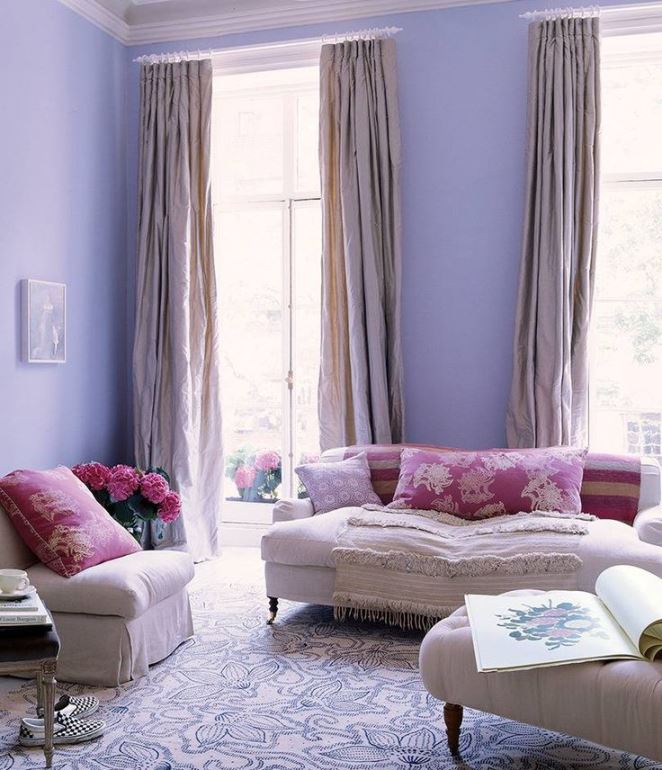
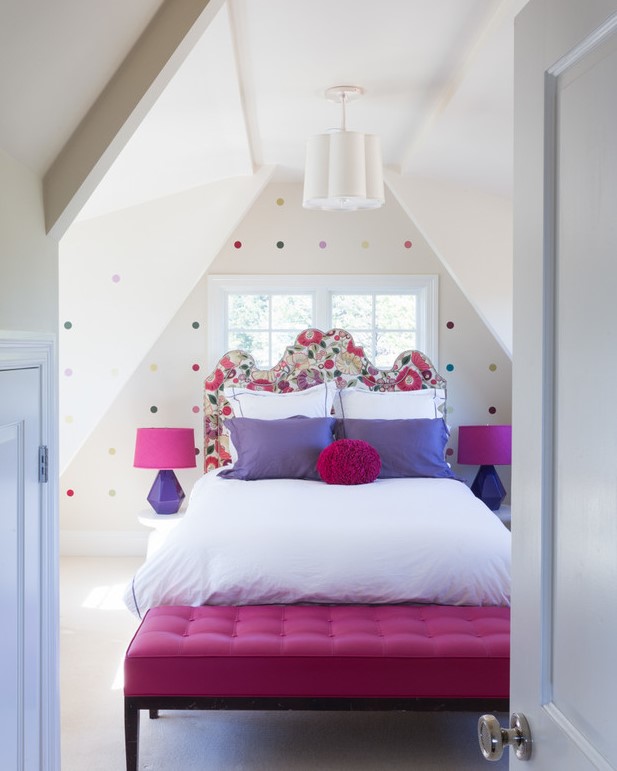
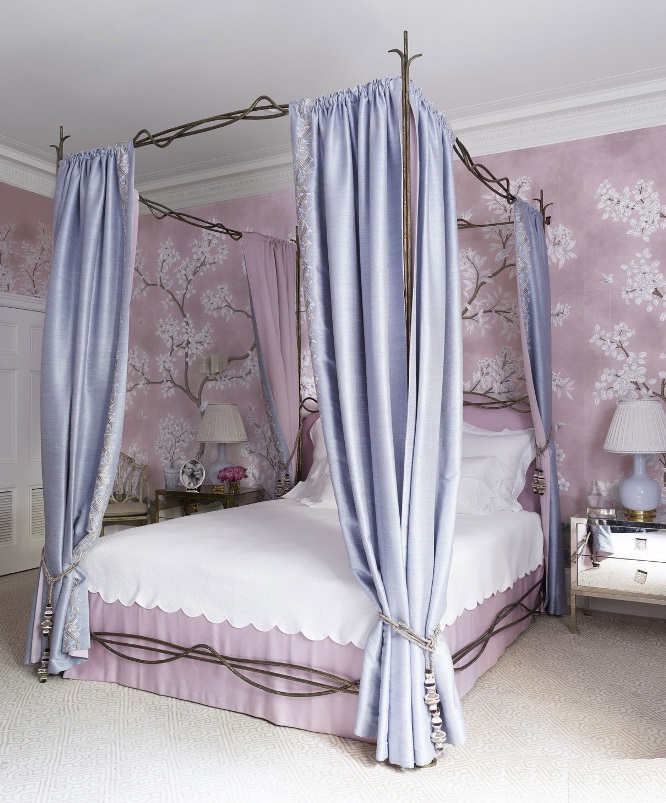

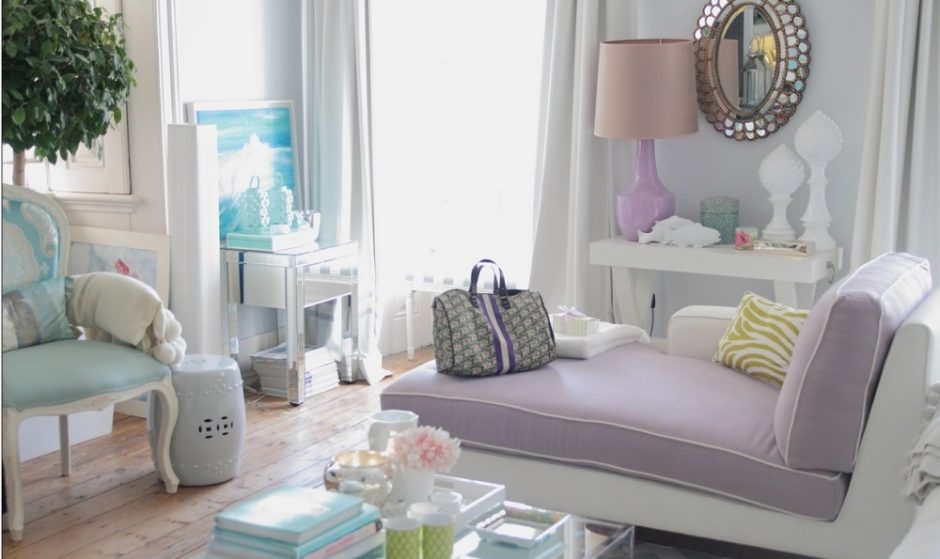
Color pairs: purple-pink
Separate spaces by functions in a bedroom-living room combo
My interview by interior design series “Szépítők” of TV2 can be seen on this link. It starts right after the short introduction.
https://tv2.hu/musoraink/szepitok/245440_csokkentheto-a-lakashitel-osszege.html
When we inherit interior design objects, there might be some which we don’t want to get rid of, however we can’t integrate them in our home in its original condition. It’s quite easy to transform, repaint or give another function to furniture. However, it’s harder in the case of carpets. If it is nice, but the size doesn’t match, or it is having a slightly worn condition, or a relative made it by hand, there are some methods to save them.
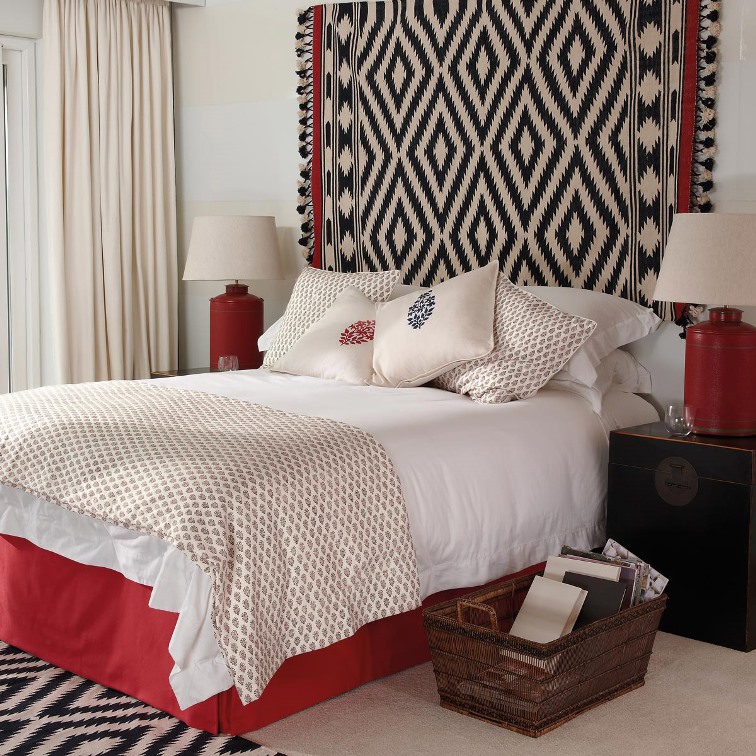
Put it on the wall instead of the floor. Tapestries and wall carpets were used already hundreds of years ago. Beauty was also important beside their covering and draught-protecting functions. Let’s follow this tradition. The big surface in the living room or the wall behind the bed is a perfect place for the carpet. It will be a great focal point in the room. Use a wooden frame to fasten it to the wall so that it cannot stretch. If it is a longer runner, it could be even a half canopy above the bed.
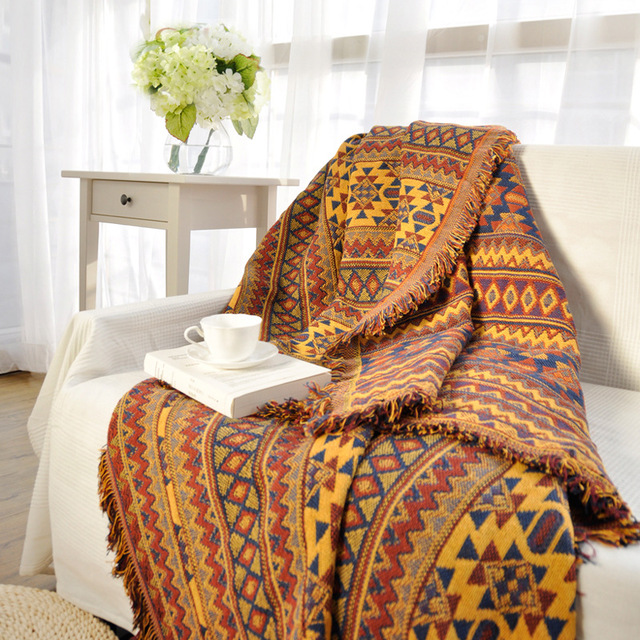
The woven, softer rugs can be used as bedspreads or laying at the end of the bed as decorating elements. Our favorite reading armchair or the sofa can be „padded” with it, making it cozier and protecting the original upholstery.
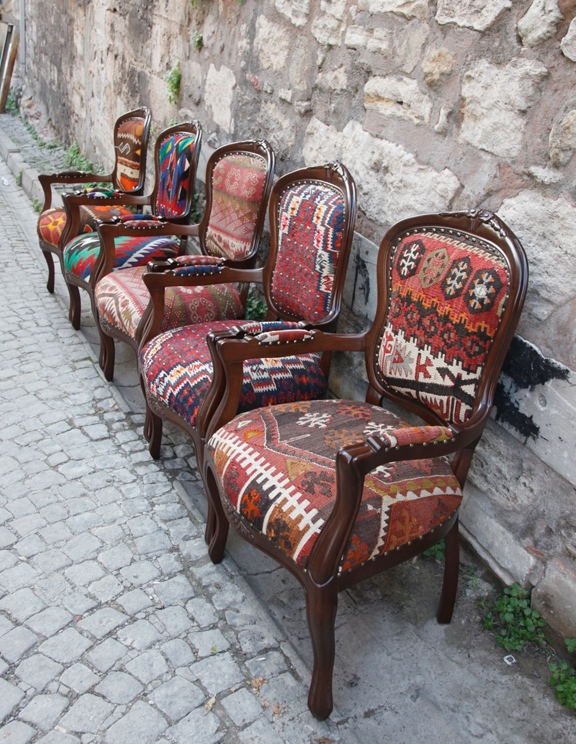
Carpet is superb for upholstering also. A pouf, an armchair or an ottoman can be renewed with it. It will be sturdy and the heritage gets a new life also. This way it is easy to bring color to the interior.
Shabbier carpets can be used for making cushions or pillows. The fabric is thick, so it’s worth to leave it to a professional seamstress, who has a proper machine for this. The carpet will be cut to measure with skipping the worn-out parts and the cushion will be made this way. Fringes and beads decors fit well for classic carpets.
Who wants to do a makeover but has no inherited pieces, there are proper beautiful and old rugs in many antiquities. Ask for help of an interior designer for selecting and further usage ideas.
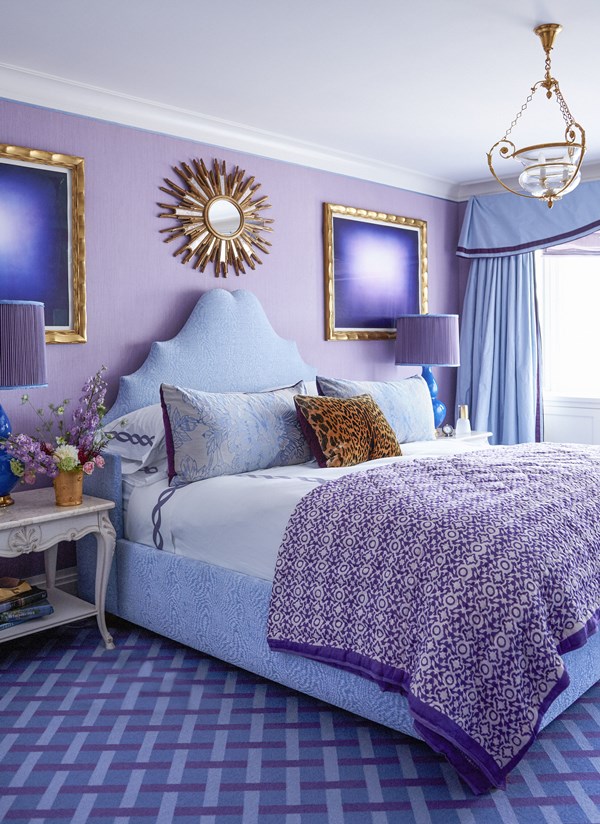
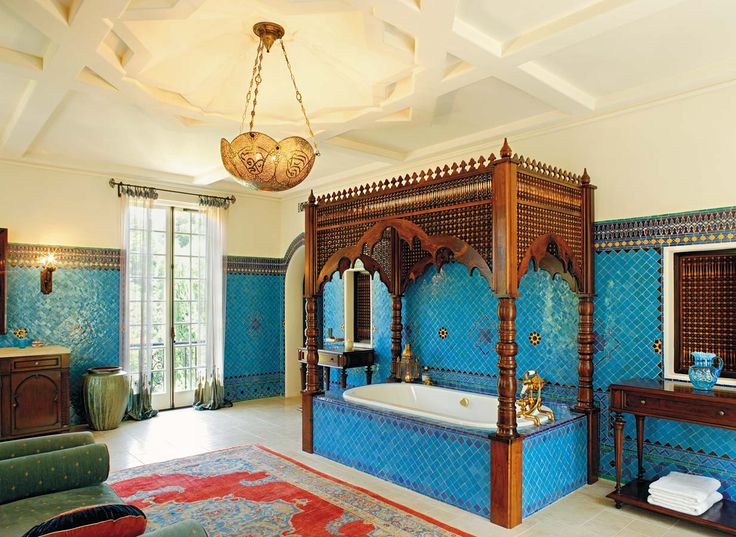
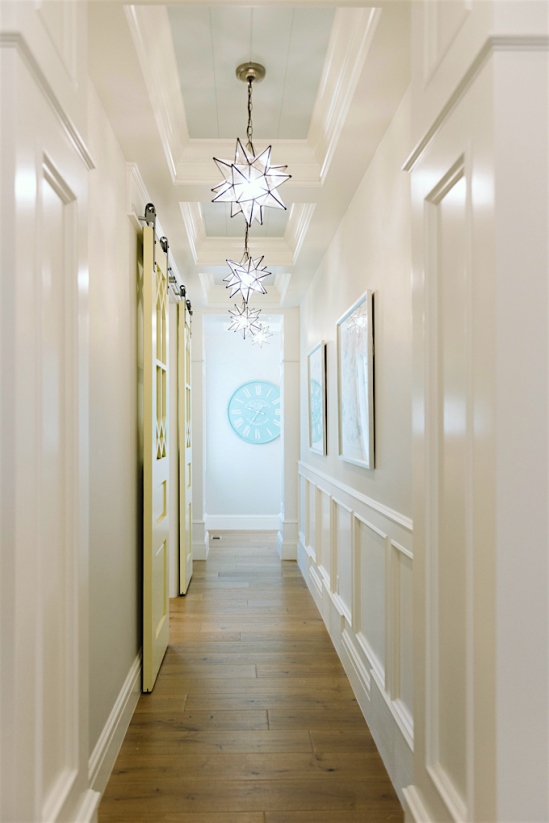
Color pairs: blue-purple
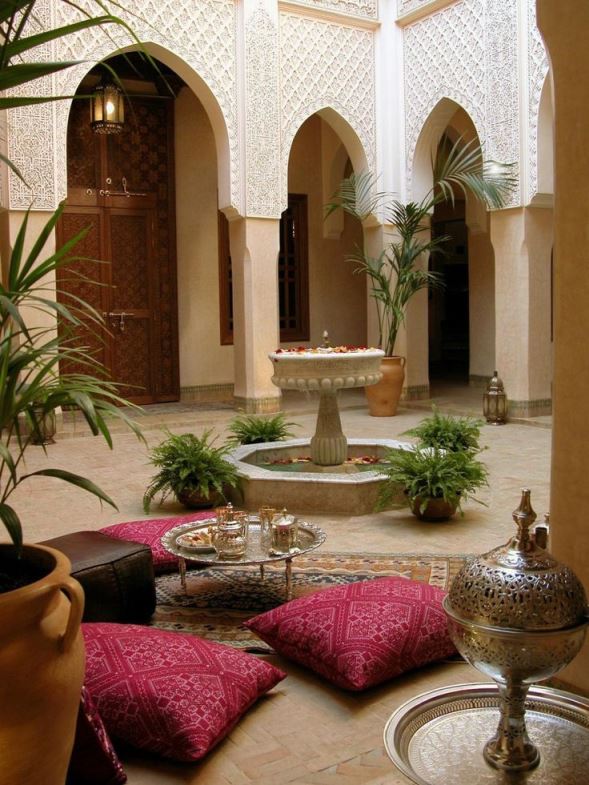
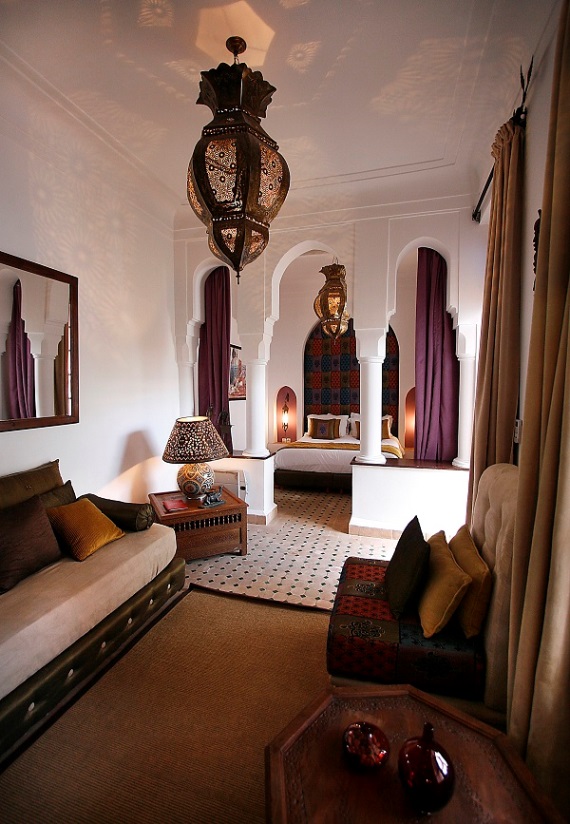
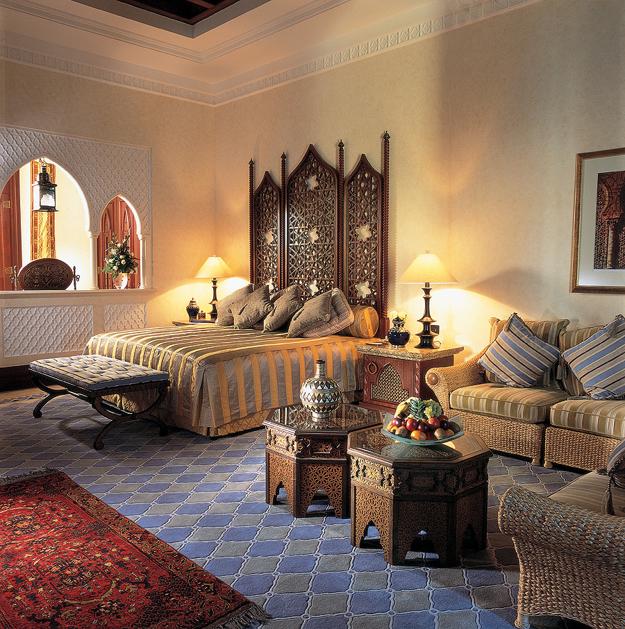
Moroccan style is one of the favorites among eastern interior trends. It means exoticism, mystery, fabulousness and eastern comfort to many people.
The architectural elements give the basis of the style. Its characteristic features are pointed arches, curved door openings, trellises and keyhole motifs. The yard of the houses is inside the building, separated from the outside world. On the one hand, they protect the privacy with this, on the other hand, this garden area helps to keep the house cool even in the big heat. It is an Arabian country, so the human and animal motifs are not allowed. They use geometrical shapes and floral motifs instead.
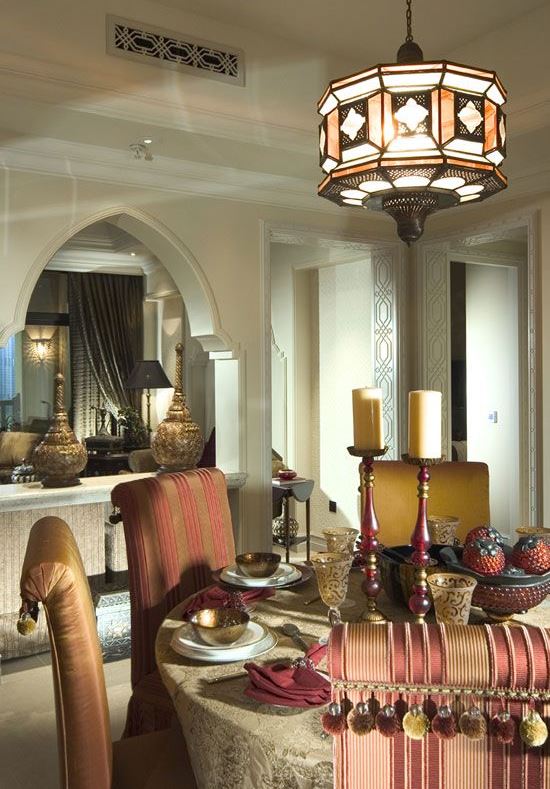
The colors are the most impressive in Moroccan homes. White or neutral walls give the background for the vibrant colored seats, accessories and carpets: bright oranges and greens, turquoises, shades of purple, red and saffron are the most significant. Summarized, these are the colors of spices and precious stones.
Richly carved wooden commodes, tables and screens can be dark brown of course, just like painted or inlayed. Using ornate concretes and tiles provide the coolness of the interiors in the tropical country, used not only as floor tiles but as decorating elements around doors and windows and pavement of fountains also. Handcraft carpets are laid on the floor. Comfort is provided by the several fabrics. Cushions, poufs and pillows bring colors in the sight.
The beautiful metal accessories are commonly made of copper or bronze. Inwrought lanterns and lantern shaped candle holders are the main features of lighting, which cast fine shadows on the walls. Decorating elements made of mirror reflect the light.
There are many shops even in Hungary selling eastern (style) accessories and furniture. Ask for help of an interior designer for creating a Moroccan style home.
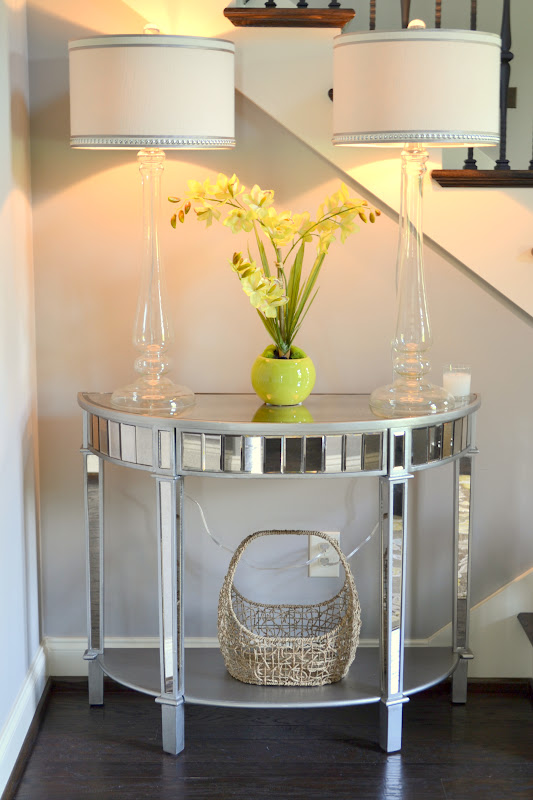
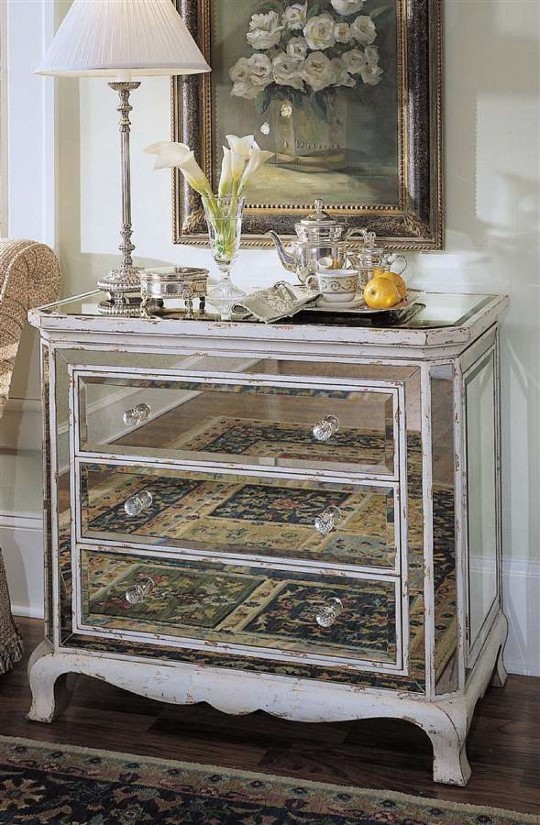
When mirror is not on the wall: special, elegant, full of light
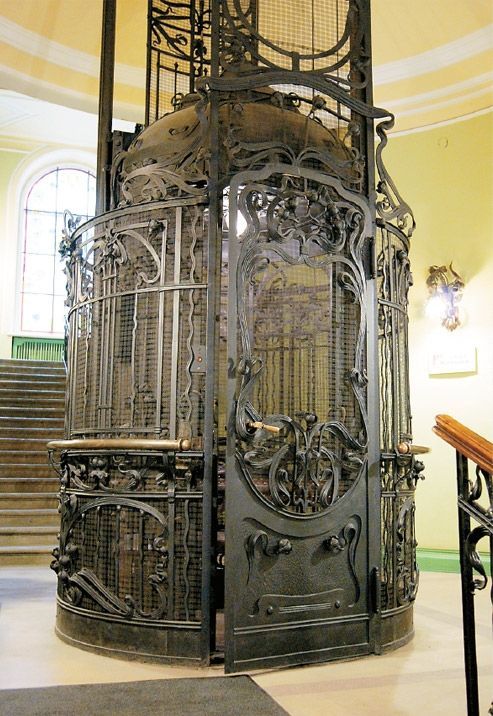
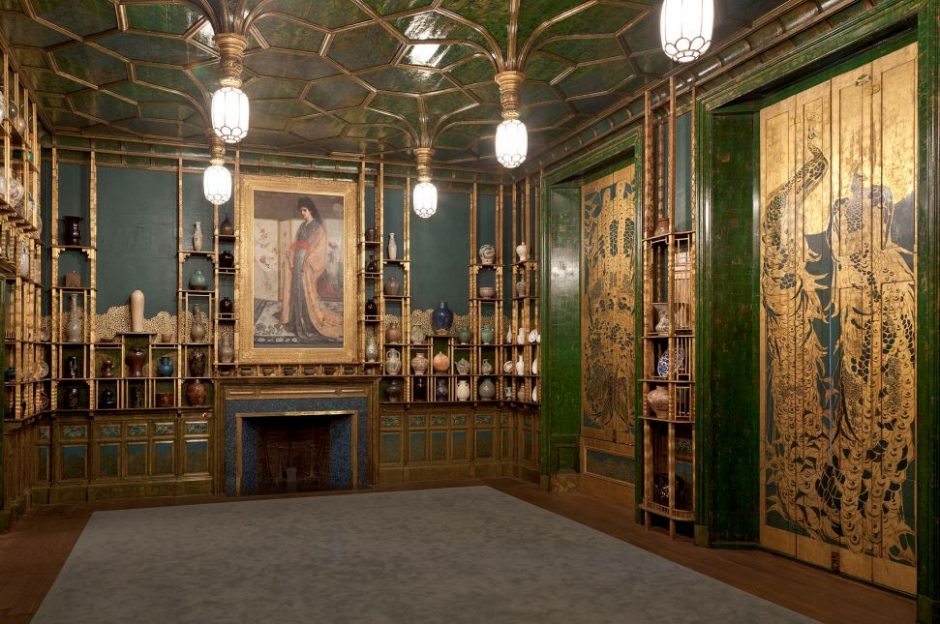
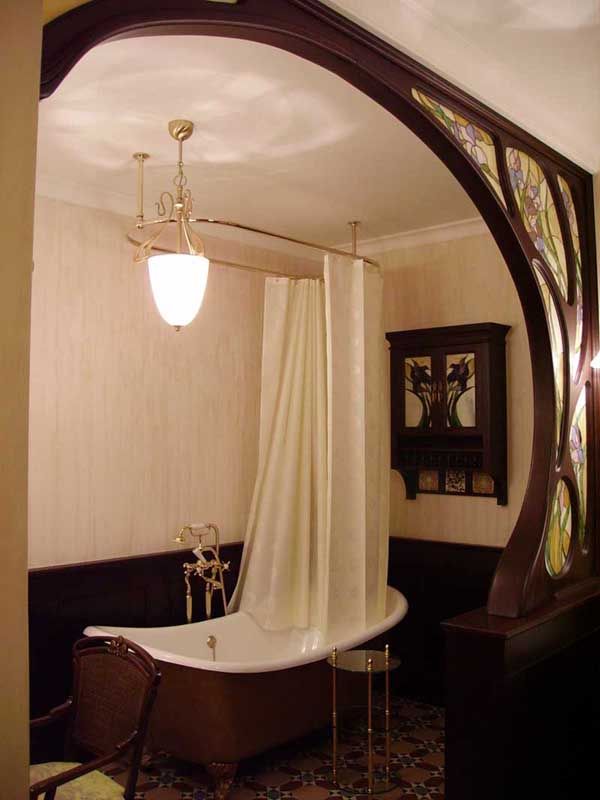
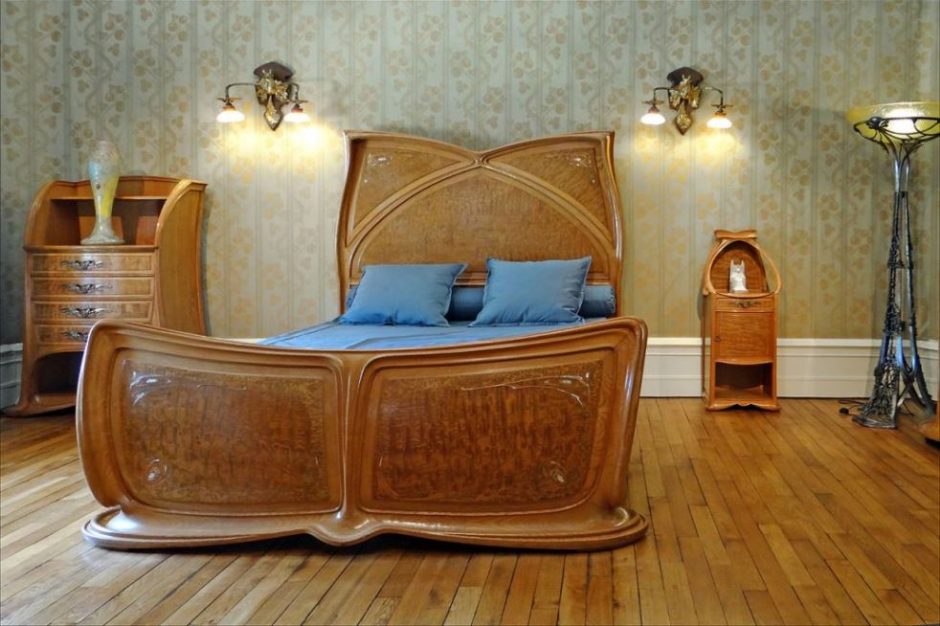
Art Nouveau was the art trend of the turn of 19th-20th centuries. Its name was Tiffany Style in the USA, Stile Floreale in Italy, Jugendstil in Germany, Modernismo in Spain, first Modern Style then also Art Nouveau in England. It was called Szecesszió in Hungary and Austria. Its main features are organic shapes, floral and animal motifs, asymmetry, multi-color and scrolling shapes. It used decorating elements in a big amount and had an effect on all fields of life, not only on arts. It brought the oncoming of content and form, namely form was created by starting from the function.
Applied arts worked closely with architecture and interior design. Glass art added to interior design with decorating doors and windows and making household objects (e.g. lamps, vases). L.C. Tiffany and R. Lalique are its outstanding representatives, for example. Textile makers designed and made upholstery fabrics and wallpapers (e.g. W. Morris). Zsolnay created eosin glazing in the field of ceramics. Ceramics were started to use not only indoors but for outer covering of houses also (e.g. Museum of Applied Arts in Budapest). In addition to jewelry, the goldsmiths also made furniture fittings and ornaments. Painters retreated off the noise of the town and founded colonies of artists and worked there (e.g. E. Munch, A. Mucha). Reinforced ferro-concrete appeared in architecture. Unique interiors came to the fore. Metal art appeared on public buildings also (e.g. subway exit of H. Guimard in Paris).
Some original pieces of furniture or accessories are available today also. For example, Tiffany lamps are still produced.
Ask for help of an interior designer for creating an Art Nouveau style home.
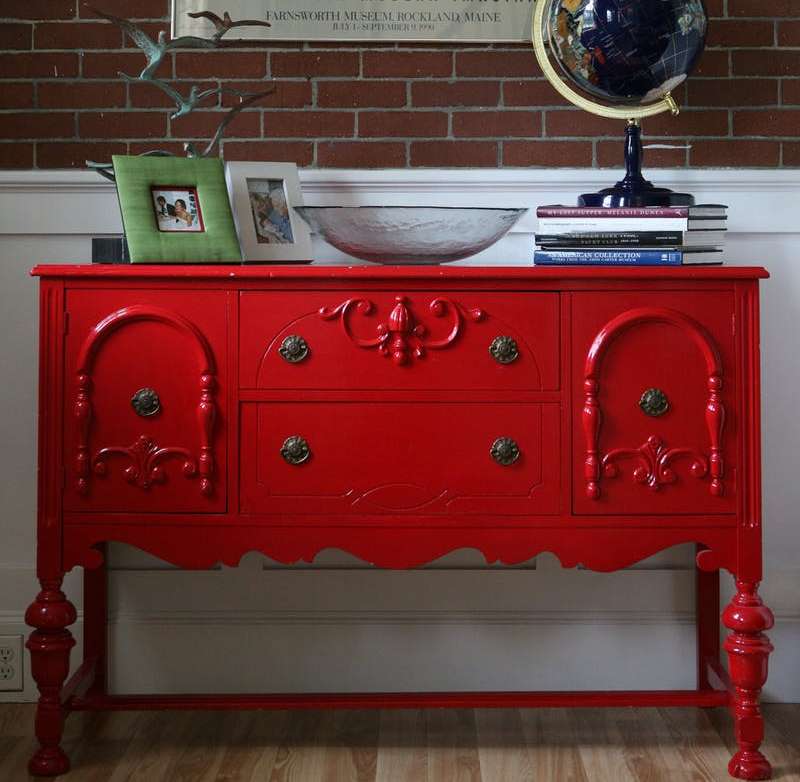
Color pairs: pink-red
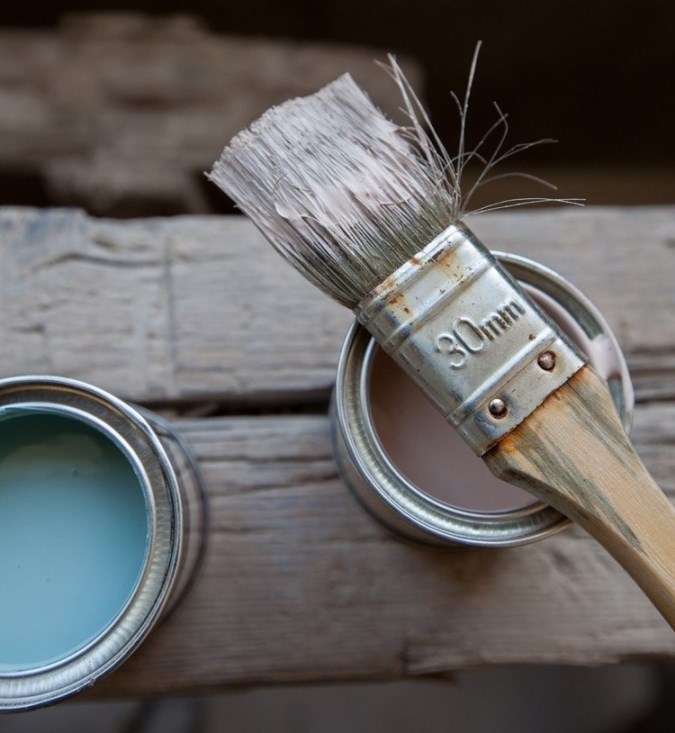
When buying paints, it is a question beyond the color and the brand, what surface it will show. It’s practical to think over the following before purchasing, especially in case of wall paints.
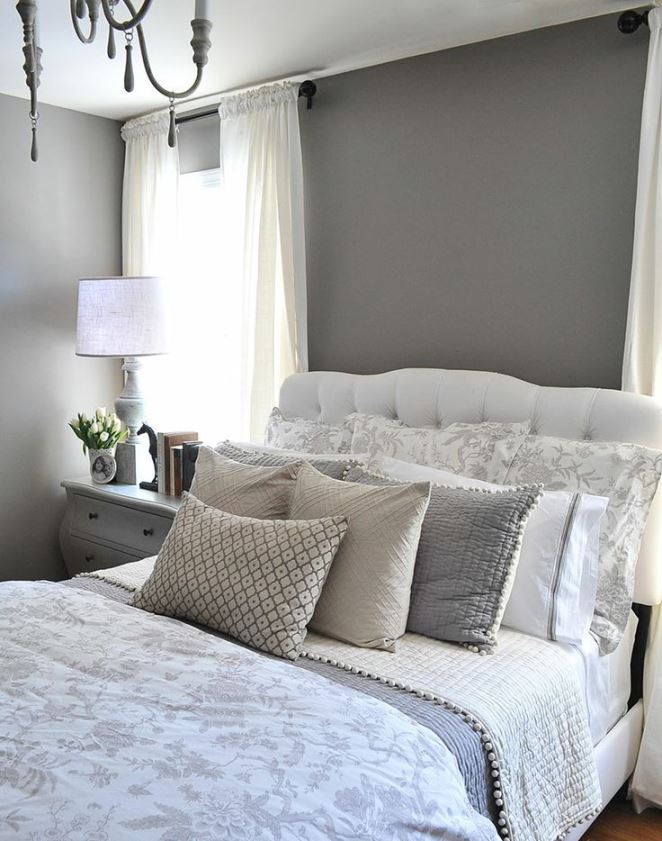
Matte paint doesn’t reflect light, this way it perfectly hides the roughness of the surface. It has almost a chalk-like sight. Disadvantages: it’s hard to clean and abrades, scratched easily. It is recommended in low-requisitioning rooms (e.g. bedroom) and for ceiling.
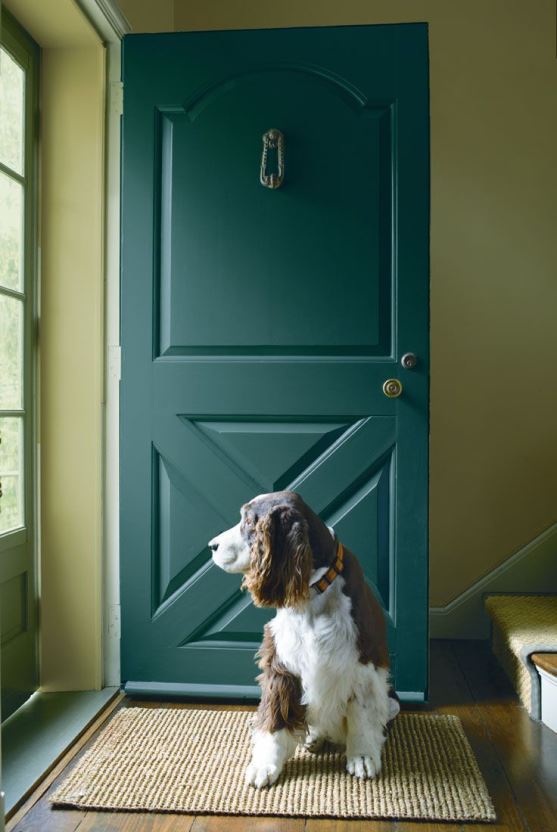
Eggshell paint reflects light moderately, so it has light „gloss”. It is more resistant, it’s easier to clean but it shows the bigger irregularities of the surface. It is recommended in more intensive- requisitioning rooms (e.g. hallway) and for doors and window frames.
Surfaces treated with semi-gloss paint bear well more regular cleaning too, but this paint shows the irregularities of the surface. It reflects light to the room, this way it is useful in darker spaces. It is recommended in kitchen and bathroom.
Use gloss paint only if you don’t mind if the painted surface attracts the eyes. It is very durable, easiest to clean, but shows every little irregularity, that’s why it is very important to prepare well the surface before painting. It is recommended mostly for furniture.
Ask for help of an interior designer for choosing the proper paint.