Elegant table setting belongs to the Mother’s Day surprise dinner
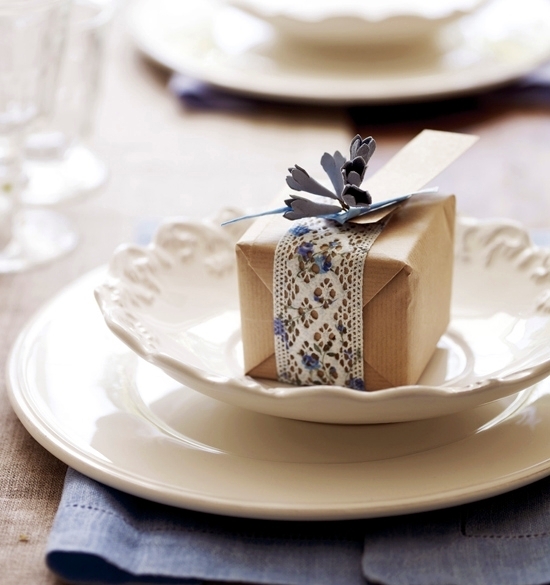
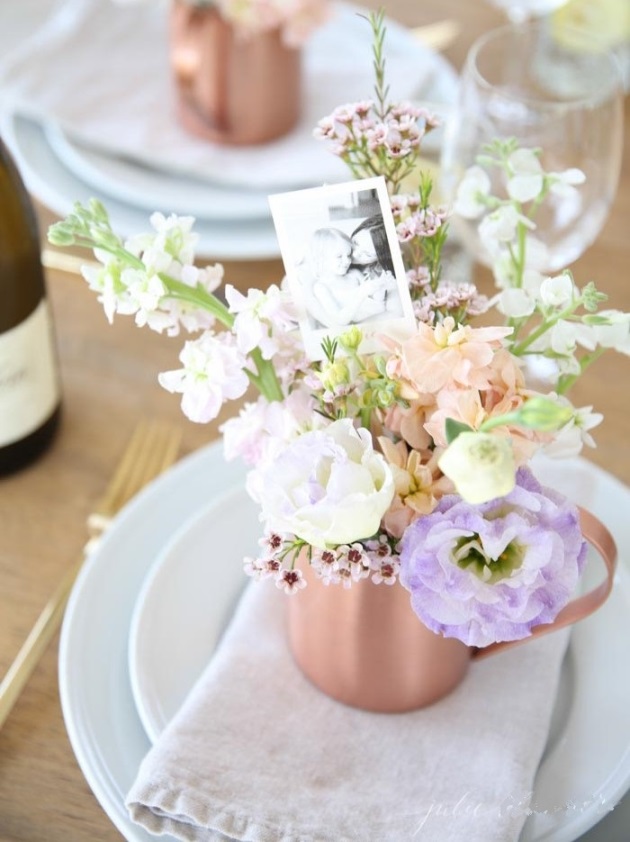
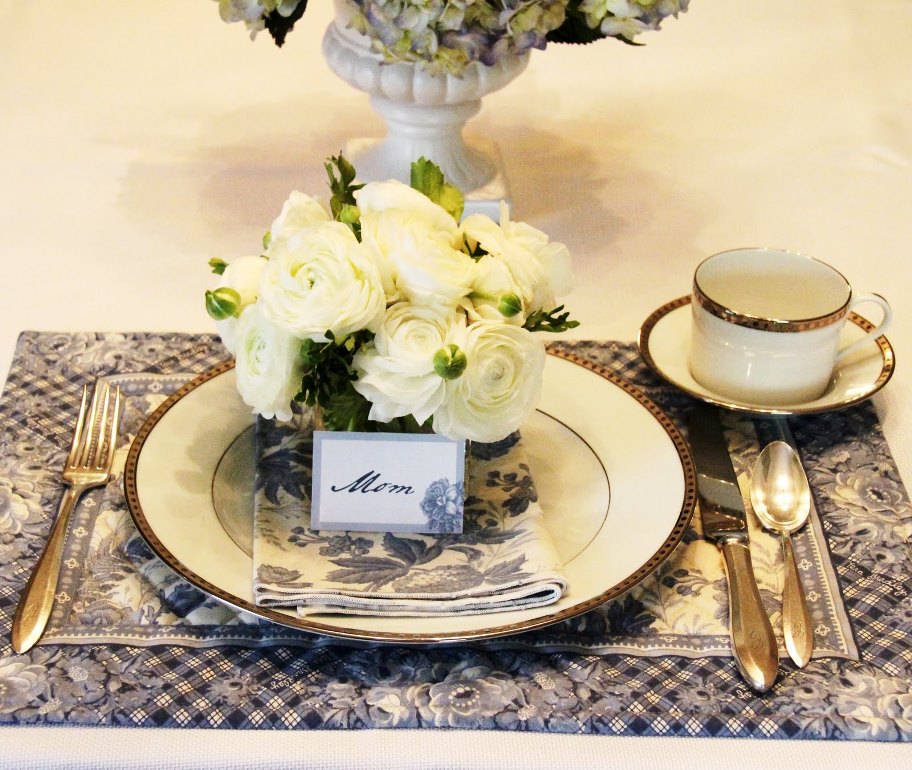

Elegant table setting belongs to the Mother’s Day surprise dinner
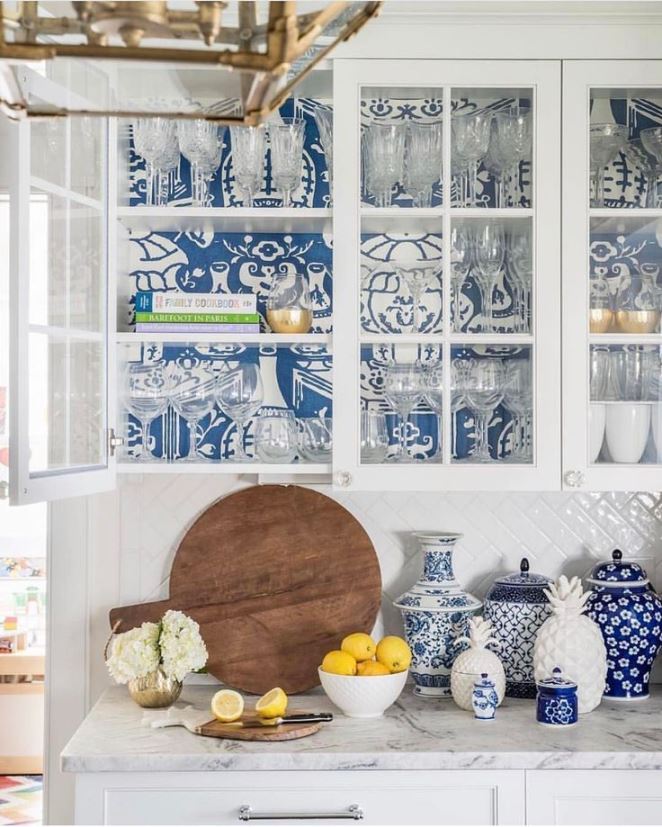
Put wallpaper into boring cabinets for making them unique furniture
DIY decoration ideas for Easter
Bigger Easter chocolate eggs, chocolate bunnies and chicks are put in the traditional Easter basket which can be a table centerpiece after „finding” it, independently the fact that some chocolates are already tasted. Smaller chocolate eggs, dragées, candies can be purchased in less decorative bags which can’t be re-closed after opening. These can be decorations also with some creative ideas.
Choose an Easter patterned fabric. Sew a small sack from a simple rectangular piece which mouth can be narrowed with a sewn ribbon. Just like a gym bag. If there is only a plain fabric, for example a bunny can be drawn on it with a marker or textile paint. The candies should be refilled to it from the plastic bag. It will be easier to handle, and the candy content is an additional surprise.
A threaded glass jar is perfect for this purpose. Paint it with a color suitable to the occasion and cover its lid with fabric. It can be decorated with a cotton wool bunny tail glued to it and card board ears glued on the lid.
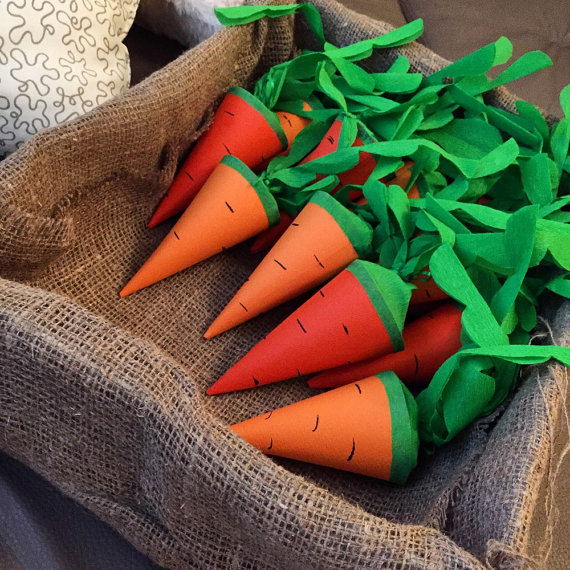
Let’s make funnels from thicker orange papers – just simply roll them. The longer part on the top should be folded back as a lid. This part should be pinned and strings made of green crepe paper or yarn can be crossed out the hole and knotted. Glue the lid after filling it. A whole carrot-basket can be made of them in which a chocolate bunny can sit.
A simple brown, folded paper bag could be cut in the middle of the opening side to get a curved V-shape. Knot it just under the cut with a nice ribbon after filling it. Glue a cotton wool tail on one side of it. The bunny-shaped sack is ready.
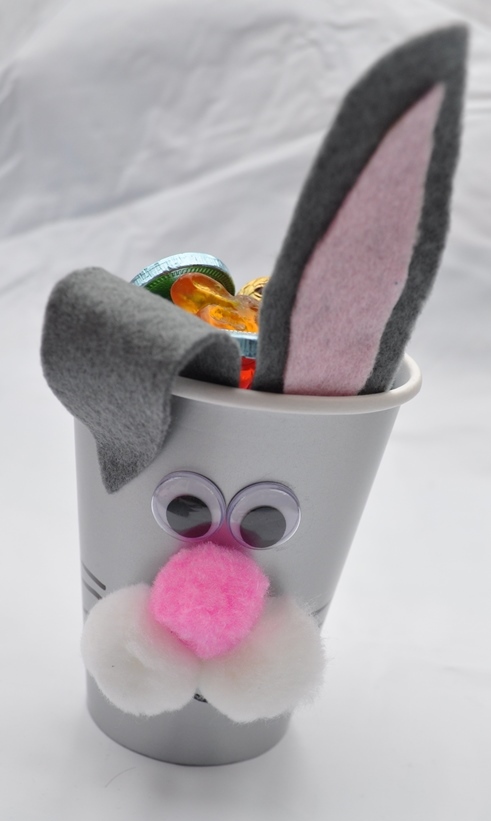
Draw eyes with a marker on a disposable white plastic cup. Two circlets made of fabric could be glued under them and a pink cotton wool glued between the circlets. Whiskers should be drawn with a marker as the addition to the bunny head. Ears made of card board or felt could be fixed to the edge of the cup. After filling it with sweets, close it with a fitting jar lid, upside down.
Ask for help of an interior designer for further ideas.
Spring is in the details
DIY decoration ideas for spring
Variations for a theme: fruits
Spring table centerpiece ideas
Valentine’s Day table centerpiece ideas
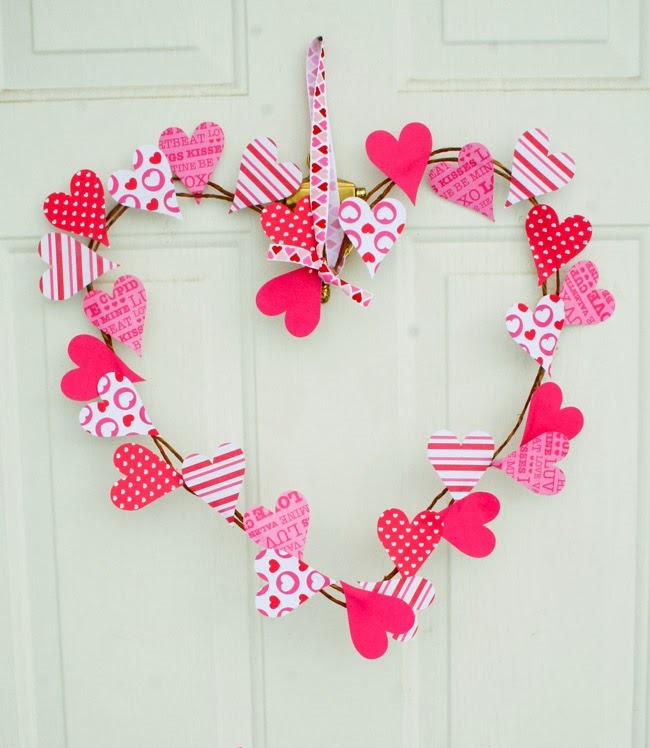
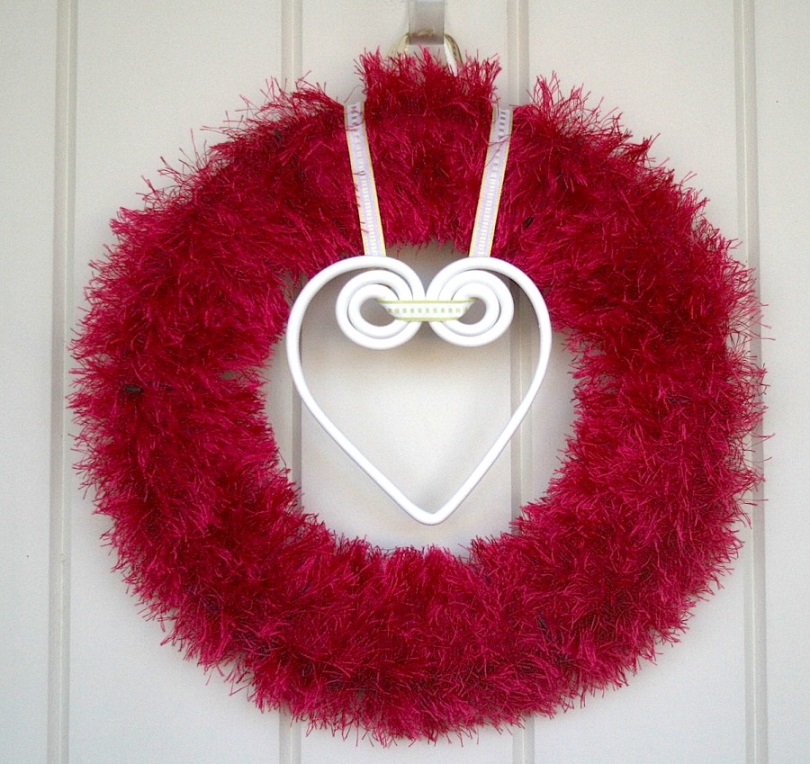
Valentin’s Day door decors – even DIY